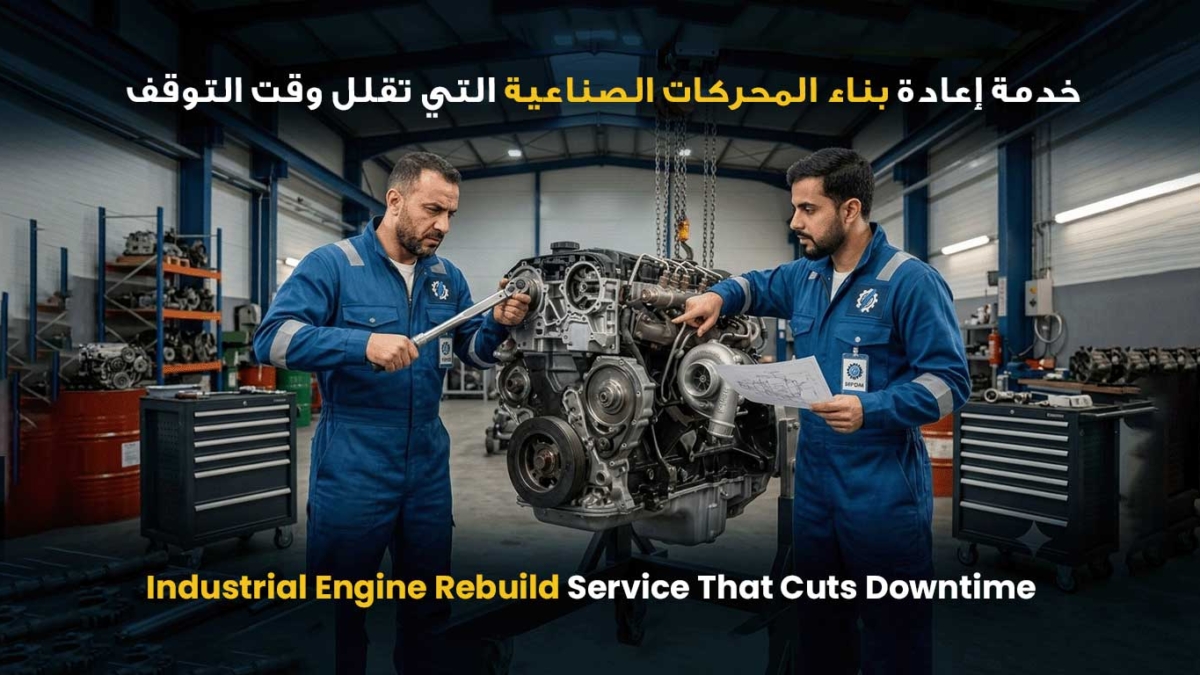
A failing engine rarely gives you the courtesy of a convenient shutdown. It starts with hard starts, low power, rising oil consumption, overheating, abnormal smoke, or a machine that no longer holds load the way it should. When that equipment supports production, construction schedules, site logistics, or standby power, the real issue is not just mechanical wear. It is operational risk. A proper industrial engine rebuild service is often the most practical way to recover reliability without absorbing the cost and lead time of full replacement.
For operations teams, the decision is rarely as simple as rebuild or replace. It depends on engine condition, equipment role, parts availability, downtime tolerance, and whether the root cause has been clearly identified. A rebuild done to specification can return an engine to dependable service life. A rushed repair that only addresses visible damage usually sends the same machine back into failure.
What an industrial engine rebuild service should actually include
A rebuild is more than replacing worn parts and repainting a block. On industrial equipment, the work has to begin with diagnosis. If an engine has low compression, bearing damage, coolant contamination, injector problems, or overheating history, each of those symptoms points to a broader system issue that needs to be confirmed before disassembly decisions are made.
A complete industrial engine rebuild service typically starts with inspection, teardown, measurement, and failure analysis. Critical components such as the block, crankshaft, cylinder head, camshaft, pistons, liners, connecting rods, turbocharger, oil pump, injectors, and fuel system components must be checked against service limits. The goal is not to guess what might fail next. The goal is to identify what failed, why it failed, and what must be restored or replaced to return the engine to stable operation.
That process matters because industrial engines do not operate under light duty. Generator engines may run under extended load. Construction and material handling equipment may face dust, heat, variable load cycles, and long operating hours. Water pump and heavy equipment engines often fail because supporting systems were overlooked, not because the rotating assembly alone was worn out.
Why rebuild instead of replace
Replacement can make sense when the engine block is beyond repair, parts are obsolete, or the machine itself is near retirement. But in many cases, rebuilding is the more economical and faster path, especially when the surrounding equipment is still structurally sound and operationally valuable.
The main advantage is lifecycle value. A quality rebuild can restore compression, oil pressure, fuel efficiency, and load response while preserving the installed asset. That reduces capital outlay and often shortens the return-to-service timeline compared with sourcing a complete replacement engine. For fleet managers and plant operators, that difference affects more than accounting. It affects project continuity, manpower planning, and service commitments.
There is also a control advantage. With a rebuild, the service team can inspect related systems at the same time, including cooling, lubrication, intake, exhaust, ECU or ECM inputs, and fuel delivery. That broader view often catches the real cause of the failure. If an injector pattern washed a cylinder, if a clogged radiator drove repeated overheating, or if contaminated oil damaged bearings, replacing the engine without correcting those conditions only resets the failure clock.
The point where a rebuild becomes necessary
Not every tired engine needs a full overhaul immediately. Some can be stabilized with targeted repair. Others are already operating far beyond acceptable wear limits and should not be kept in service without major work.
Common signs that an engine is approaching rebuild territory include repeated low compression across cylinders, excessive blow-by, metal contamination in oil, chronic coolant loss, bearing noise, crankcase pressure, severe power loss, and recurring overheating after normal maintenance has already been done. High operating hours are part of the picture, but hours alone should not drive the decision. Application, load profile, maintenance history, and previous repairs matter just as much.
For uptime-critical assets, the right time to rebuild is often before catastrophic failure. Planned rebuilds usually cost less than emergency recoveries because they avoid secondary damage to the block, crankshaft, or head. They also reduce the operational disruption that comes from a sudden breakdown in the middle of a production cycle or field operation.
What separates a dependable rebuild from an expensive repeat failure
The difference is discipline. A dependable rebuild follows specifications, measurements, and controlled assembly procedures. It does not rely on assumptions. Clearances must be measured, mating surfaces checked, tolerances documented, and component condition verified. If the work includes liner replacement, head servicing, injector calibration, or turbo inspection, those tasks should be completed as part of one controlled process rather than treated as unrelated repairs.
Parts quality also matters. Industrial buyers know that the cheapest available component is rarely the lowest-cost option over time. Gaskets, bearings, rings, seals, pumps, and fuel system parts all influence rebuild life. The right service partner will advise where genuine parts are necessary, where high-quality aftermarket options are acceptable, and where mixing grades introduces avoidable risk.
Testing is another dividing line. An engine should not leave rebuild on appearance alone. It should be tested for oil pressure, temperature stability, abnormal noise, leaks, smoke condition, and performance under appropriate operating conditions. If the equipment uses electronic controls, sensor validation and ECU or ECM checks should be part of the job. Mechanical rebuild quality can be undermined by unresolved electronic faults.
Industrial engine rebuild service and downtime planning
From an operations perspective, the rebuild itself is only one part of the job. Planning around downtime is just as important. That means confirming scope early, identifying long-lead parts, deciding what can be done in the field versus the workshop, and setting realistic return-to-service expectations.
Field service can help with inspection, fault confirmation, removal planning, and supporting system checks on site. Workshop conditions are usually better for controlled teardown, machining coordination, precision measurement, and final assembly. The right approach depends on engine size, machine access, contamination risk, and whether the surrounding equipment also needs corrective work.
This is where a full-service maintenance partner has an advantage. When diagnostics, mechanical repair, electronic support, and parts sourcing sit under one team, the rebuild moves with fewer delays and fewer handoffs. That matters when a generator supports facilities, when heavy equipment is tied to project deadlines, or when a pump failure interrupts industrial operations.
The systems around the engine matter too
An engine rebuild can fail early if supporting systems are ignored. Cooling systems should be pressure checked and cleaned where needed. Fuel tanks and lines may need inspection for contamination. Air intake restrictions should be corrected. Radiators, charge air coolers, thermostats, water pumps, oil coolers, and hoses all affect rebuild outcome.
The same applies to drivetrain and load-side conditions. If the engine is connected to a generator, pump, compressor, or hydraulic system that has abnormal resistance or control issues, the rebuilt engine can return to a damaging operating environment. Good rebuild service does not stop at the engine internals. It verifies that the engine is going back into a machine that can support normal operating parameters.
Choosing the right service partner
Industrial buyers are not looking for promises. They are looking for response, technical judgment, and consistent workmanship. A service provider should be able to explain failure findings clearly, define the rebuild scope, document parts and measurements, and advise whether rebuild is the right investment or not.
Speed matters, but speed without process creates repeat downtime. The better standard is controlled turnaround – fast enough to protect operations, disciplined enough to protect the asset. In practice, that means accurate diagnostics, parts coordination, qualified technicians, and post-rebuild testing that confirms the engine is ready for service.
For businesses in Dammam, Dhahran, Khobar, Easter Province, that local response capability can make a measurable difference when equipment failure cannot wait for extended vendor lead times. Companies such as Millennium Power Operations & Maintenance support this need by combining engine overhaul, diagnostics, repair, and parts supply in one service structure, which simplifies decisions for teams managing multiple asset types under pressure.
A rebuild should give you more than a repaired engine. It should give you confidence that the equipment can go back to work, carry load, and stay available. When the job is done properly, the real result is not just restored horsepower. It is fewer interruptions, better maintenance control, and more predictable operations when uptime matters most.