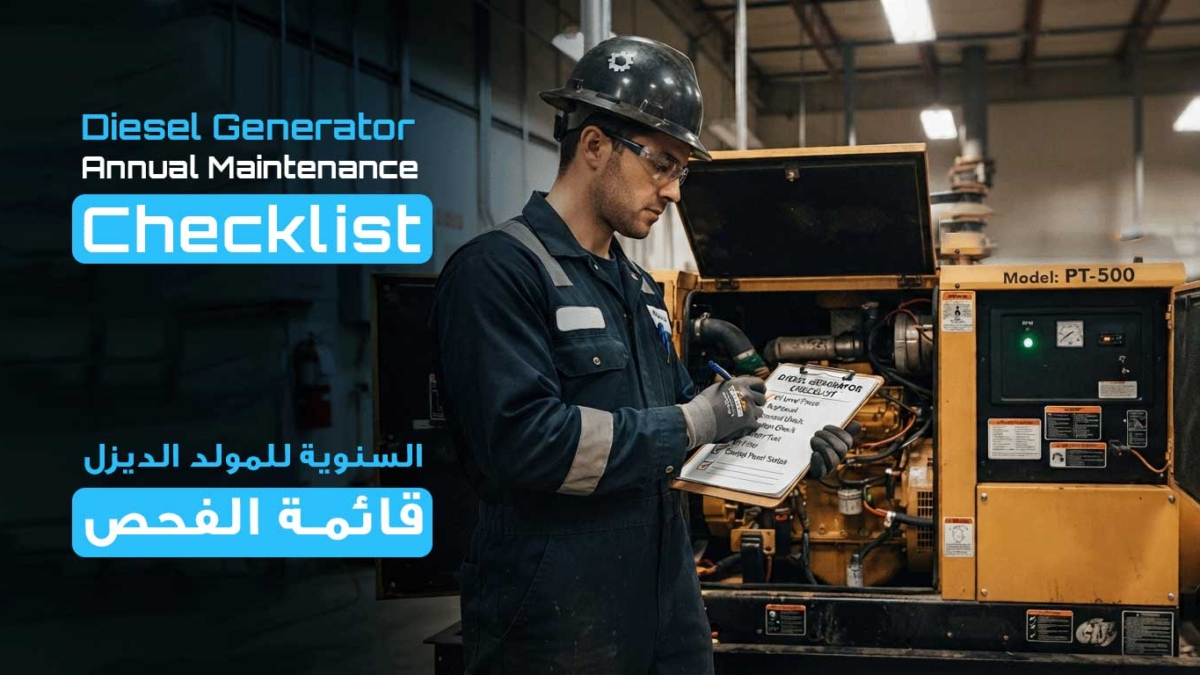
When a generator fails during a utility outage, the problem usually did not start that day. It started months earlier with a weak battery, contaminated fuel, overdue filter changes, or a cooling issue that went unnoticed. Diesel generator annual maintenance is the point where routine care becomes risk control. For facilities, contractors, and industrial operators, that yearly service window is not just another maintenance task. It is where reliability is either protected or quietly lost.
Why diesel generator annual maintenance matters
A standby generator can sit for long periods and still develop serious problems. Fuel degrades. Batteries lose capacity. Belts harden. Connections loosen under vibration and heat cycles. Small leaks become contamination issues. If the set only runs during tests and emergencies, those hidden faults often stay invisible until the unit is under full demand.
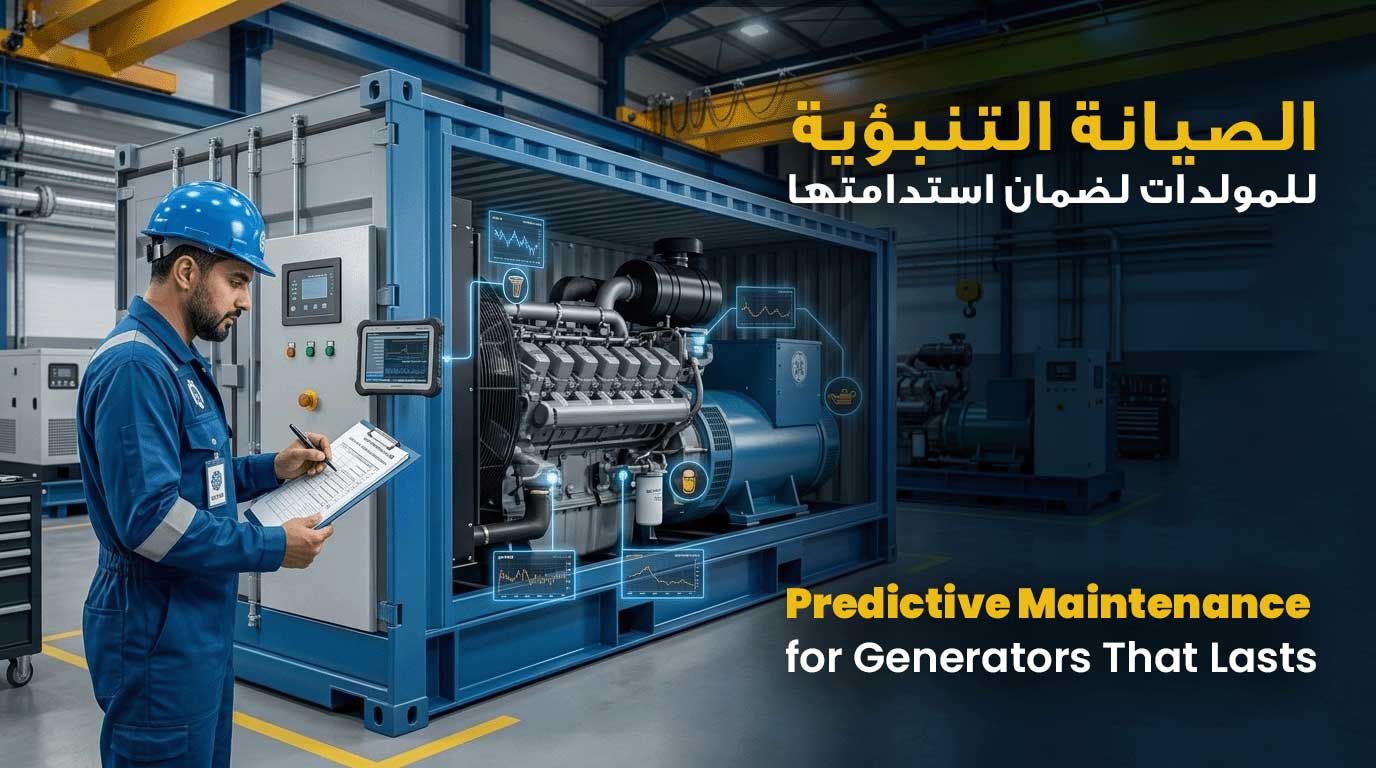
That is why diesel generator annual maintenance should be treated differently from weekly inspections or monthly test runs. The annual service is where technicians go beyond surface checks and verify the condition of the engine, alternator, control system, cooling circuit, exhaust, fuel delivery, and transfer operation. It is also the right time to compare performance against load requirements, operating hours, and the environment the generator works in.
For uptime-critical operations, the value is direct. Fewer emergency callouts, lower risk of load rejection, better fuel efficiency, and more predictable maintenance budgeting. There is also a safety reason. Overheating, insulation breakdown, fuel leaks, and exhaust issues can create hazards that are expensive well before they become obvious.
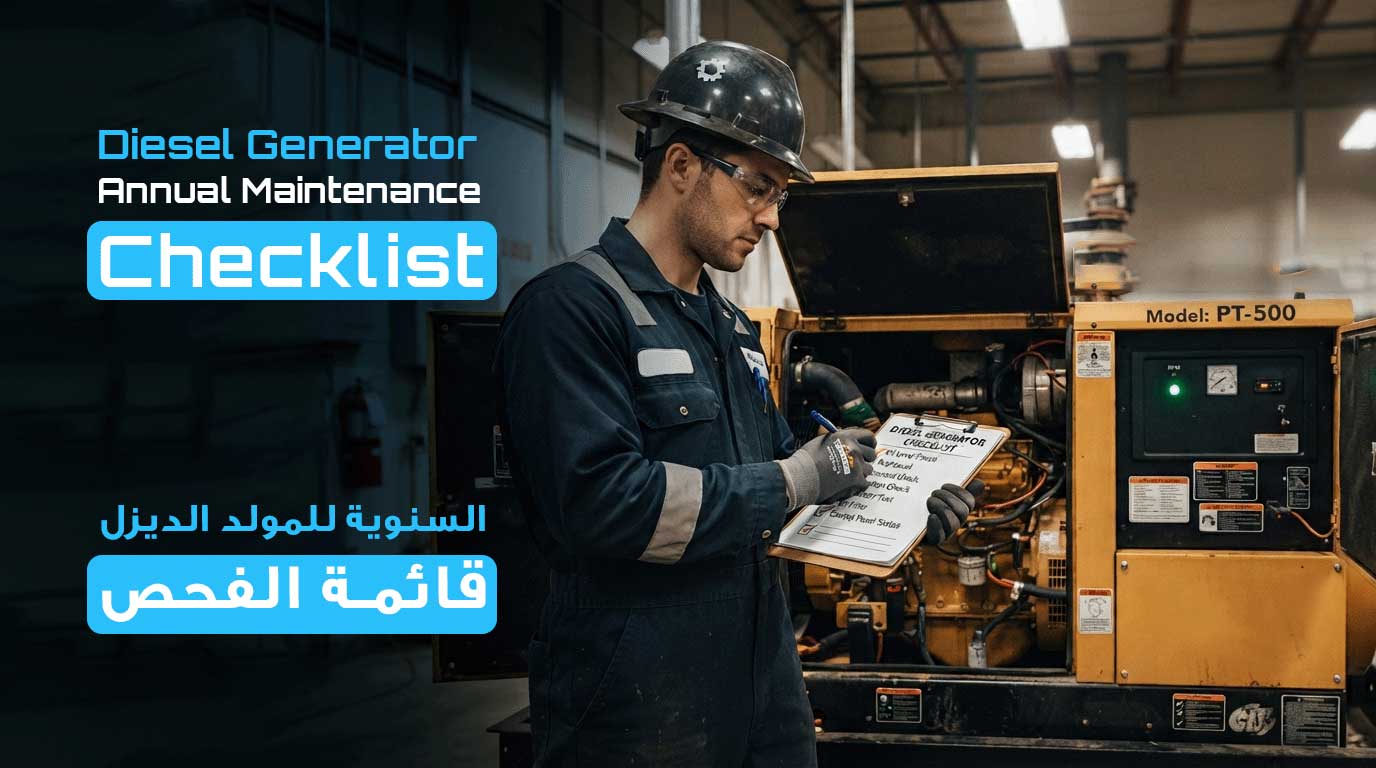
Diesel Generator Inspection Checklist
Send download link to:
What a proper annual service should include
Annual generator maintenance is not one fixed checklist for every site. A standby unit at a commercial facility, a prime power generator at a project site, and a generator supporting industrial operations will not age in the same way. Still, there are core service areas that should always be covered.
Engine inspection and service
The engine is the first place to start. Oil and filter changes are standard, but a serious inspection goes further. Technicians should check for oil leaks, coolant leaks, abnormal vibration, crankcase pressure issues, belt wear, hose condition, and signs of combustion problems. Air filters should be assessed for restriction, not just appearance. If service intervals are based on hours, the annual visit should confirm whether low-hour operation has still exposed the engine to moisture, dust, or fuel quality issues.
Valve adjustment may also be due depending on engine model and hours. On some units, skipping this over time affects combustion quality, temperature control, and starting performance. That is one of many cases where maintenance depends on manufacturer specifications and operating history, not only the calendar.
Fuel system checks
Fuel causes a high share of generator reliability problems, especially in standby systems. Annual maintenance should include inspection of fuel lines, connections, filters, water separators, and tank condition. Water contamination, microbial growth, and sediment in stored diesel can restrict flow and damage injectors and pumps.
This is also the time to verify fuel transfer operation if the system uses external tanks or day tanks. A generator may run well for fifteen minutes during testing and still fail during an extended outage if fuel transfer is inconsistent. In hot environments or dusty field conditions, fuel system attention becomes even more important.
Cooling system inspection
Cooling issues are one of the fastest ways to lose a generator under load. Annual service should include coolant level and condition checks, inspection of hoses and clamps, radiator cleaning, fan and belt assessment, and pressure testing where needed. Technicians should also confirm that coolant concentration and type are correct for the engine.
A generator that idles through inspections but overheats under full building load often has a cooling problem that was missed because no one checked airflow restriction, weak hoses, internal blockage, or fan drive condition. Annual maintenance is the right time to catch those faults before summer demand exposes them.
Battery and starting system testing
Many generator failures are starting failures. A battery can show acceptable voltage and still lack the capacity to crank the engine reliably. That is why annual maintenance should include battery testing under load, terminal cleaning, charger verification, cable inspection, and starter system checks.
If batteries are nearing end of life, replacement is usually cheaper than the downtime caused by waiting for failure. This is especially true for facilities where the generator is expected to start immediately during transfer events.
Electrical and control system inspection
The mechanical side gets attention, but electrical faults can be just as disruptive. Annual maintenance should include inspection of terminals, wiring, protective devices, sensors, relays, control panel indicators, and alarm history. Loose electrical connections create heat and intermittent faults that are difficult to diagnose during an emergency.
Technicians should also verify engine protection settings, shutdown circuits, meter accuracy, and controller operation. If the generator includes ECU or ECM functions, electronic diagnostics can identify faults that do not yet show as operational failures. This is one area where experienced service support matters because not every issue is visible without the right tools.
Load testing and operational verification
A generator that starts is not necessarily a generator that performs. One of the most valuable parts of diesel generator annual maintenance is confirming that the unit carries load correctly. That means checking voltage stability, frequency control, response to load changes, and overall operating behavior at realistic demand levels.
For some sites, a scheduled building load test may be enough. For others, a dedicated load bank test is the better option, especially when the generator rarely sees sufficient load in normal operation. Underloading can lead to wet stacking, carbon buildup, and poor long-term engine condition. Load testing helps identify those issues while also proving the set can support the required demand.
The right test approach depends on the generator application, site constraints, and operational risk. Hospitals, industrial plants, commercial facilities, and construction projects may each need a different testing method and service interval.
Common problems found during annual maintenance
Annual inspections often uncover the same pattern of issues: aging batteries, coolant leaks, dirty radiators, deteriorated hoses, fuel contamination, overloaded or underloaded operation, corroded terminals, and overdue filter replacement. In some cases, the generator itself is mechanically sound, but the support systems are not. That includes automatic transfer switch issues, charger failure, sensor faults, or poor ventilation in the generator room.
Another common problem is maintenance that looks complete on paper but misses condition-based checks. Replacing oil and filters is necessary, but it does not confirm whether injectors are performing correctly, whether governor response is stable, or whether exhaust backpressure is rising. Annual maintenance should answer a larger question: will this unit perform when the site actually needs it?
How to plan diesel generator annual maintenance without disrupting operations
The best time for annual service is before peak risk periods, not after them. For many facilities, that means planning before extreme heat, storm season, or major project milestones. If the generator supports essential operations, the service window should be coordinated with site management so testing and shutdown steps do not create avoidable disruption.
It also helps to build annual maintenance into a broader preventive plan. Weekly visual checks, monthly exercising, quarterly inspections, and annual deep service work together. If the annual visit is the only time the generator gets attention, costs usually rise because small defects are left to develop.
A practical maintenance partner will also track parts that should be changed proactively. Belts, hoses, batteries, and filters are low-cost compared with emergency downtime. The trade-off is simple: planned replacement costs money now, but reactive failure usually costs more and happens at the worst time.
Choosing the right service approach
Not every generator needs the same annual scope, and not every service provider works to the same standard. For critical equipment, the value is in technicians who can handle mechanical service, electrical testing, diagnostics, controller faults, and parts coordination without turning one job into three separate vendor calls.
That matters even more for businesses operating across Dammam, Dhahran, Khobar, Jubail, and Alahsa, where response time and field support can directly affect operations. A service partner like MPOM adds value when annual maintenance is tied to real diagnostics, practical reporting, and fast corrective action rather than a basic inspection sheet.
A good annual maintenance visit should leave you with clear findings, remaining risk areas, and a plan for the next service interval. If it does not, the generator may be serviced, but the operation is not really protected.
The most reliable generator is rarely the newest one. It is the one that is inspected properly, tested under realistic conditions, and maintained before minor faults become outage events.
Diesel Generator Inspection Checklist
Send download link to: