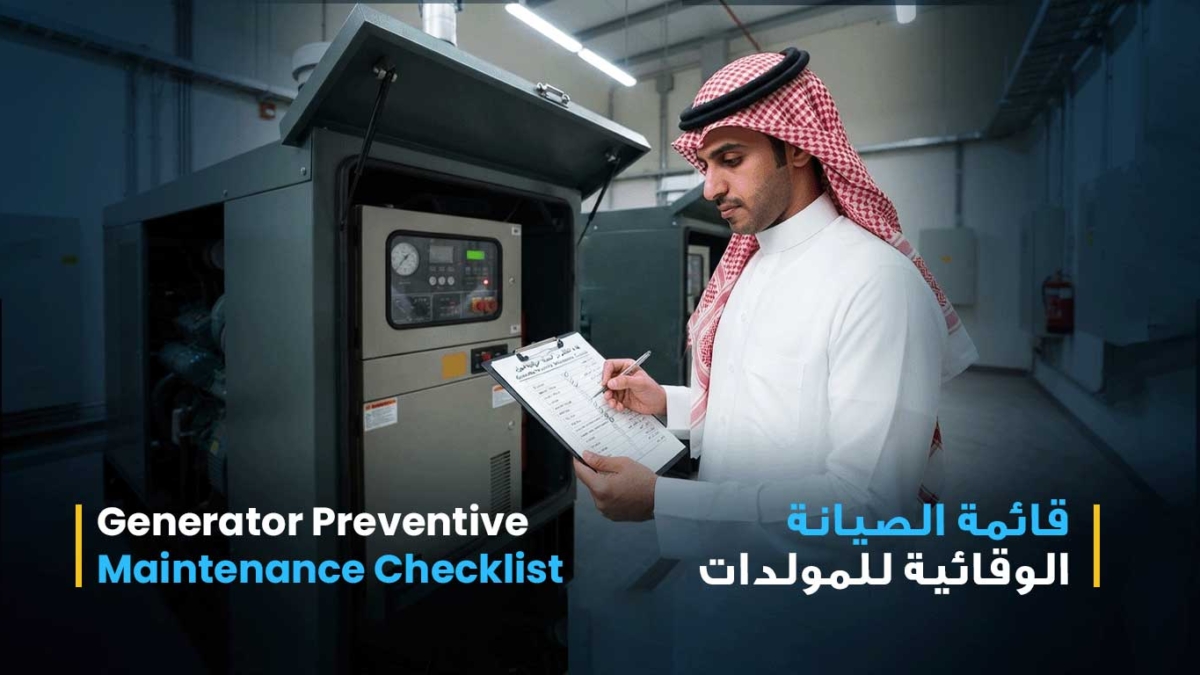
A generator usually fails at the worst possible time – during a peak load period, an outage, a site handover, or a critical production shift. That is why a generator preventive maintenance checklist is not just a service document. For operations teams, it is a control measure that protects uptime, safety, fuel performance, and repair budgets.
In industrial, commercial, and infrastructure environments, standby and prime power generators work under pressure. Heat, dust, variable loading, extended idle periods, and inconsistent servicing all shorten component life. A structured maintenance checklist gives maintenance managers, plant supervisors, and contractors a repeatable way to catch small faults before they become major failures.
What a generator preventive maintenance checklist should cover
A useful checklist does more than confirm that the unit starts. It should verify the condition of the engine, alternator, fuel system, cooling system, batteries, controls, safety devices, and load performance. If any one of these areas is weak, the generator may still run, but it may not carry load reliably when your operation needs it most.
The checklist also needs to match how the generator is used. A standby generator at a facility with infrequent outages will have different maintenance priorities than a prime power unit on a remote site. The service intervals, test frequency, and wear patterns are not the same. That is where many problems begin – teams apply a generic schedule to equipment operating in very different conditions.
Daily and weekly generator checks
For generators in regular service or in high-risk applications, quick routine inspections matter. These checks are designed to identify visible issues before they affect reliability.
Start with a general visual inspection. Look for oil leaks, coolant leaks, fuel seepage, loose belts, cracked hoses, vibration damage, abnormal exhaust color, and signs of overheating. Check the base frame and mounting points for movement or stress. Dust buildup around radiators, air intake points, and electrical enclosures should also be addressed early, especially in harsh site conditions.
Fluid levels should be confirmed, not assumed. Engine oil, coolant, and fuel levels need to be within operating range. Low levels may point to consumption, leakage, or poor servicing discipline. If top-ups are repeatedly needed between inspections, that is a warning sign that needs technical investigation.
Battery condition is another frequent weakness. Inspect terminals for corrosion, verify charger operation, and check that battery voltage remains within specification. A healthy generator with a weak battery is still a starting failure waiting to happen.
The control panel should be checked for alarms, fault history, irregular readings, and communication errors. If your generator uses electronic controls or ECU-based systems, sensor faults and intermittent warnings should never be ignored. Small electrical faults often become no-start or shutdown events later.
Generator Preventive Maintenance Checklist
Send download link to:
Monthly inspection and functional testing
A monthly generator preventive maintenance checklist should move beyond visual checks and confirm actual operating readiness. Running the unit under no load for a few minutes is not enough. The test needs to verify stable startup, normal warm-up, and acceptable operating readings.
During the run test, monitor oil pressure, coolant temperature, charging rate, frequency, voltage stability, and engine sound. Any hunting, surging, delayed crank, smoke, or unusual vibration should be documented. If the generator is connected to an automatic transfer system, the transfer sequence should also be tested under controlled conditions.
Fuel quality deserves more attention than it often gets. In standby applications, diesel can sit for long periods. That creates a risk of contamination, water accumulation, and microbial growth in the tank. Over time, poor fuel quality damages injectors, reduces combustion efficiency, and causes difficult starts. Tank condition, fuel lines, filters, and water separators should all be part of the inspection process.
Air intake components also need review. A clogged air filter restricts combustion and increases fuel consumption. In dusty industrial environments, replacement intervals may need to be shorter than the standard recommendation. This is one of the clearest examples of why fixed calendar schedules do not always match field reality.
Quarterly and semiannual maintenance items
At longer intervals, the checklist should include more detailed service work. Oil and filter changes should be performed based on running hours, load profile, and manufacturer guidance. Some operations overextend oil service intervals to reduce maintenance cost, but this usually increases wear on internal engine components and creates more expensive repairs later.
Cooling system performance should be inspected carefully. Check coolant concentration, hose condition, clamps, radiator cleanliness, fan operation, and any signs of internal contamination. A generator that starts normally but overheats under load is a major risk, particularly during utility failure or peak operational demand.
Inspect belts for tension and wear. Review the exhaust system for leaks, corrosion, mounting damage, and restrictions. On larger units, vibration analysis and alignment checks may also be justified, especially where equipment runs continuously or where previous failures have occurred.
Electrical inspection should include cable condition, terminal tightness, grounding integrity, insulation concerns, and breaker health. Many generator failures are blamed on the engine when the root cause is actually electrical – poor connections, weak output components, or neglected control wiring.
Annual generator preventive maintenance checklist under load
The annual service interval is where many hidden problems are exposed. A full load test, preferably with a controlled load bank where appropriate, confirms whether the generator can carry rated demand without overheating, voltage instability, fuel starvation, or shutdown faults.
This test is critical for standby generators that spend most of the year idle. A generator can appear healthy during a short exercise run and still fail during real demand. Wet stacking, carbon buildup, weak fuel delivery, deteriorated insulation, or cooling limitations may only appear when the unit is pushed to operating load.
Annual maintenance should also include a more complete review of injectors, turbocharger condition where applicable, governor response, alternator output, protective shutdown systems, and the full control logic. If the generator supports a critical facility, it is also wise to review maintenance records against actual fault history and parts replacement trends. The checklist should not only confirm service was done. It should help shape the next maintenance decision.
Common checklist mistakes that create downtime
The biggest mistake is treating generator maintenance as a box-ticking exercise. If technicians only record fluid levels and startup status, they miss the patterns that predict failure. Repeat top-ups, slow crank behavior, rising operating temperature, unstable frequency, and minor leaks are not small issues when they happen consistently.
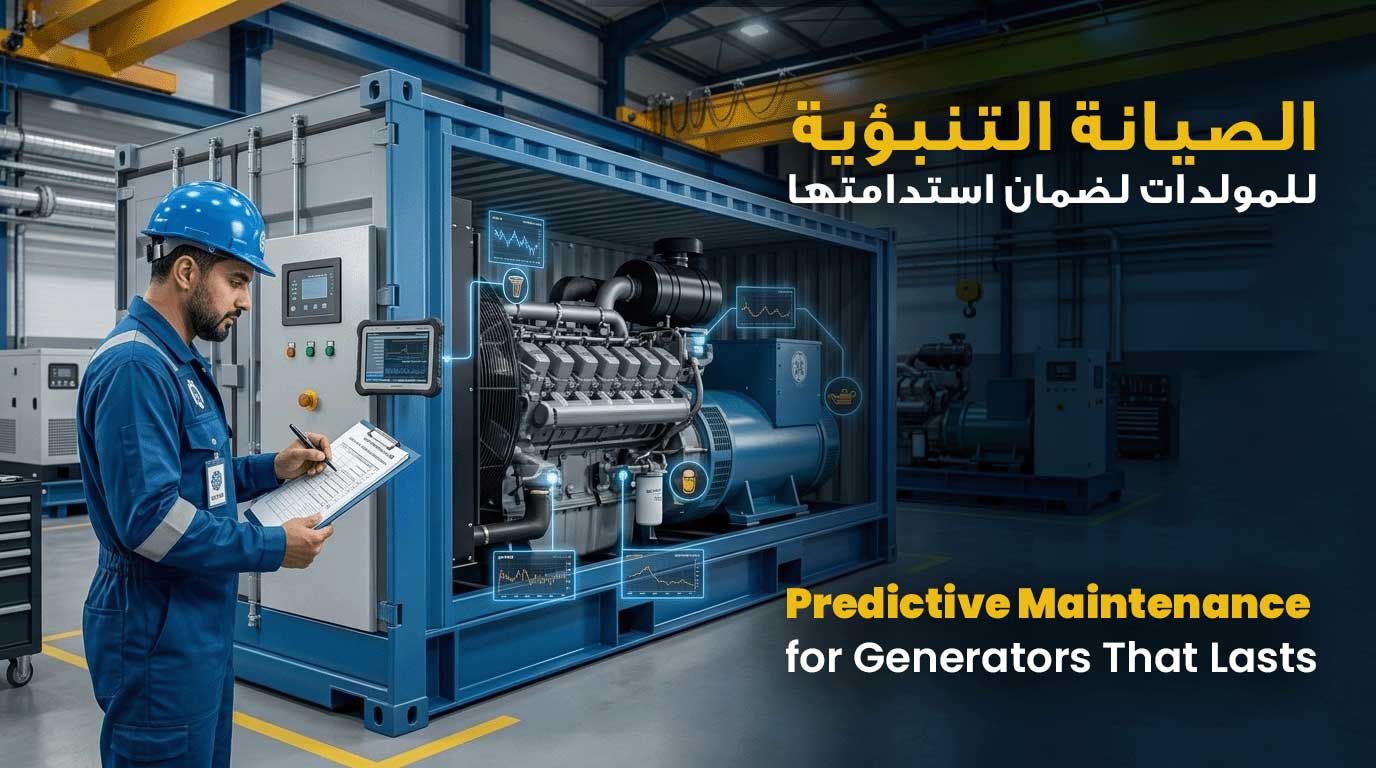
Another common problem is relying only on time-based service intervals. Hours run, ambient conditions, dust exposure, load cycles, and fuel storage practices all affect generator health. A unit operating on a remote construction project in high heat requires a different maintenance rhythm than a backup generator in a controlled facility.
Parts quality also matters. Low-grade filters, belts, sensors, and electrical components may reduce immediate cost, but they often increase repeat faults and shorten service life. For uptime-critical equipment, the real metric is not purchase price. It is the total cost of interruption, technician callouts, production loss, and emergency repair.
When to move from checklist to corrective action
A checklist is useful only if it leads to action. If inspections repeatedly show coolant loss, battery weakness, hard starting, fuel contamination, excessive smoke, or alarm history, the generator needs targeted diagnostic work. Continuing to operate while recording the same issue each month only delays failure.
This is where experienced service support becomes essential. The right maintenance partner does more than perform routine inspections. They identify patterns, isolate root causes, source the correct parts, and respond quickly when a fault develops into an operational risk. For many B2B operators, that combination is more valuable than a basic maintenance visit.
Millennium Power Operations & Maintenance supports generator reliability with field service, diagnostics, repair capability, and maintenance planning built around actual site conditions. That kind of support matters when a generator is part of a wider uptime-critical operation, not a standalone asset.
Building a checklist that works in the field
The best checklist is one your team can actually use under operational pressure. It should be clear, practical, and tied to specific intervals, readings, and action thresholds. It should also include space for observations, not just pass or fail marks. A technician who notices an unusual smell, sound, vibration, or startup delay may be identifying the first sign of a larger issue.
If you manage multiple generators, standardization helps, but only up to a point. Keep the inspection format consistent, then adjust service details by generator model, duty cycle, and application. That balance gives procurement, operations, and maintenance teams better visibility without losing technical accuracy.
A strong generator preventive maintenance checklist does not eliminate breakdown risk completely. What it does is reduce surprises, improve planning, and give your operation more control over one of its most important backup systems. When uptime carries financial and safety consequences, that control is worth protecting.
Generator Preventive Maintenance Checklist
Send download link to: