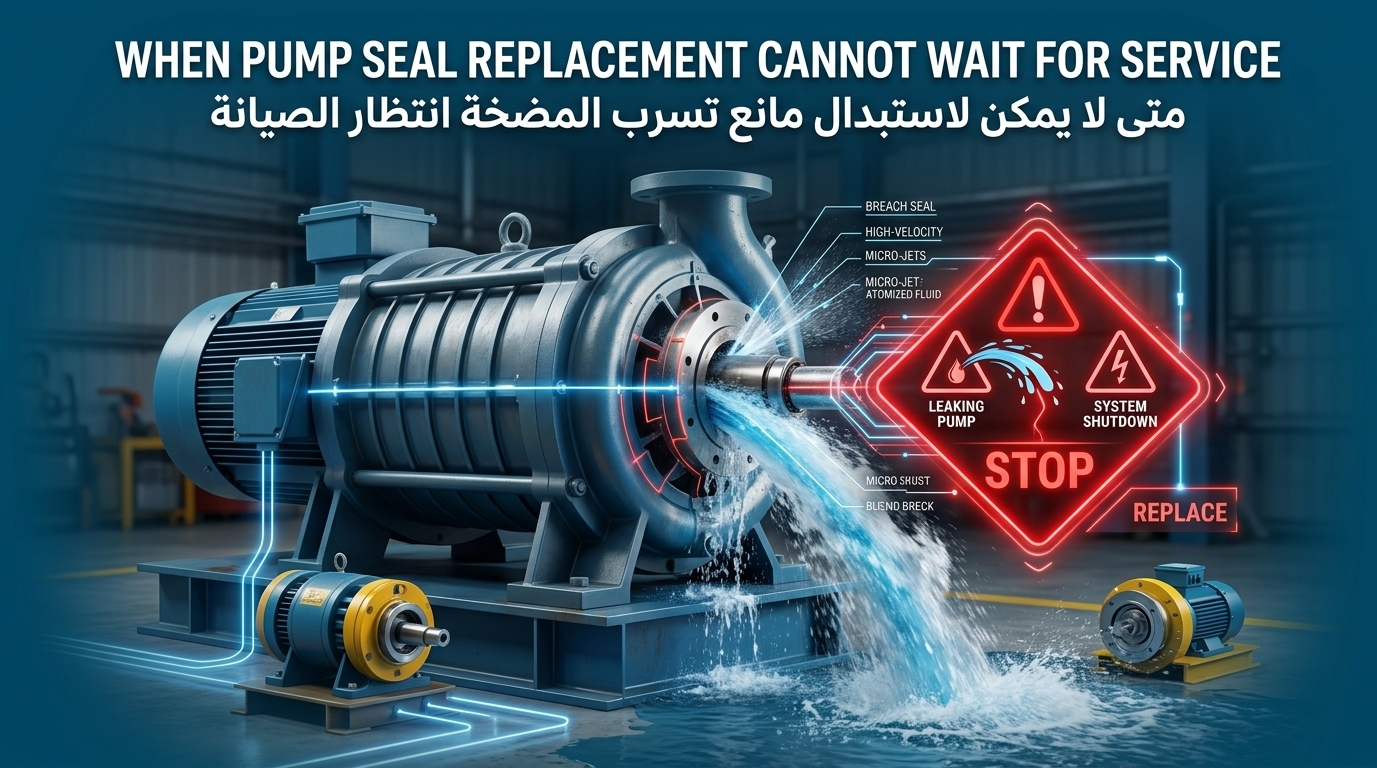

A pump seal rarely fails without leaving evidence. A small drip at the seal chamber, rising bearing temperature, visible corrosion, or repeated top-ups of barrier fluid can become a shutdown if it is ignored. The top industrial pump seal problems usually develop through a combination of operating conditions, installation quality, and maintenance gaps – not because a seal simply reached the end of its life.
For facility and operations teams, the priority is not just stopping leakage. It is identifying why the seal failed before the replacement unit is installed. A new mechanical seal placed into the same poor conditions will often fail again, creating more downtime, product loss, and unnecessary repair cost.
Why Pump Seal Failures Need Fast Attention
Mechanical seals control leakage where a rotating shaft passes through the pump casing. Their faces run extremely close together and depend on correct alignment, lubrication, cooling, pressure, and fluid conditions. When any one of these factors changes, heat and wear increase quickly.
In water transfer, dewatering, process water, chemical handling, and booster pump applications, a leaking seal can lead to more than housekeeping issues. It can damage bearings, contaminate surrounding equipment, reduce pump performance, and expose personnel to hazardous fluids. On critical pumps, a seal problem can also force an unplanned outage during a period when the system must remain available.
The right response depends on the service. A clean-water pump with minor packing-area leakage is different from a process pump with a mechanical seal handling hot, abrasive, or corrosive fluid. The inspection must consider the full pump and operating system, not the seal alone.
Top Industrial Pump Seal Problems to Watch For
Dry Running and Loss of Lubrication
Dry running is one of the fastest ways to damage a mechanical seal. Seal faces require a thin fluid film to control friction and carry heat away. If the pump loses prime, runs with a closed or restricted suction, operates below minimum flow, or experiences intermittent liquid supply, the faces can overheat within minutes.
Common evidence includes discolored seal faces, cracked carbon components, heat checking, a burnt smell, and sudden heavy leakage after the pump is restarted. Dry running may be caused by an empty tank, blocked suction strainer, air leak on the suction side, poor priming, or incorrect operating procedure.
The repair is not complete until the cause of fluid loss is corrected. Check suction piping, valves, strainers, level controls, and minimum-flow arrangements. Where operators cannot continuously monitor conditions, low-level protection or dry-run monitoring may be justified for the risk involved.
Misalignment, Shaft Runout, and Vibration
A seal can be correctly installed and still fail early when the pump and driver are misaligned. Angular or parallel misalignment transfers load into the shaft, bearings, coupling, and seal faces. Excessive shaft runout, bent shafts, worn bearings, soft foot, pipe strain, or damaged couplings create the same result.
Vibration-related seal failures often show uneven face wear, fretting on elastomers, damaged springs, or repeated leakage after seemingly successful seal replacements. The pump may also produce abnormal noise or show rising vibration readings at the bearing housing.
Alignment should be verified after the pump reaches operating condition when possible, because thermal growth can change the machine position. Baseplate condition, hold-down bolts, grout, and piping support all matter. Correcting alignment without removing pipe strain is only a partial repair.
Abrasive Solids and Contaminated Fluid
Sand, scale, rust, welding debris, and process solids can enter the seal chamber and score the precision faces. In industrial water systems, this is common after pipeline work, tank cleaning, poor filtration, or corrosion inside aging piping. Abrasive wear quickly enlarges the sealing gap and reduces seal life.
A seal designed for clean water may not survive a service containing suspended solids. In these cases, the pump may require a different seal-face material, a suitable flush plan, a cyclone separator, improved filtration, or changes to the seal chamber arrangement. Each option adds cost and maintenance requirements, so the selection should match the actual solids level and the cost of downtime.
Before installing a replacement seal, flush the system and inspect the seal chamber, impeller, wear rings, and shaft sleeve. Replacing only the seal while leaving abrasive debris in the pump will not protect the new component.
Corrosion and Chemical Incompatibility
Chemical attack may be gradual, but it is highly destructive. Elastomers can swell, harden, crack, or lose strength when they are incompatible with the pumped fluid. Metal components can pit or corrode, while seal faces can be attacked by aggressive chemicals, incorrect cleaning agents, or contaminated flush water.
Changes in chemical concentration, temperature, pH, or cleaning procedure can make a previously acceptable seal arrangement unsuitable. A pump handling treated water, acids, hydrocarbons, or chemical additives should be reviewed whenever the process changes.
The solution is to confirm the actual fluid composition and operating temperature, then select compatible elastomers, metal parts, and face materials. Do not rely only on the fluid name. Concentration, temperature, pressure, and intermittent exposure conditions affect compatibility.
Excessive Pressure or Incorrect Seal Chamber Conditions
Mechanical seals operate within defined pressure and temperature limits. Excessive discharge pressure, blocked seal flush lines, incorrect quench pressure, or pressure reversals can force seal faces apart or overload secondary sealing components. In double-seal arrangements, an incorrect barrier-fluid pressure can also defeat the protection the system is intended to provide.
Pressure problems may appear as sudden leakage after a valve operation, repeated failure during startup, or unstable performance when system demand changes. Gauge readings, control-valve position, and seal-support system condition should be checked before the seal is removed.
Verify that flush and cooling lines are open, clean, and connected correctly. If the pump duty has changed, confirm that the existing seal plan is still suitable. A pump upgraded for higher pressure or temperature may require a different seal arrangement rather than another standard replacement.
Installation Errors and Poor Assembly Practices
Even a high-quality seal can be damaged during installation. Common errors include handling seal faces without proper cleanliness, installing components in the wrong orientation, using incorrect setting dimensions, nicking elastomers, failing to remove setting clips, or applying unsuitable lubricant to O-rings.
Shaft sleeves and seal chambers must also be inspected closely. Burrs, corrosion, scoring, and deposits can cut elastomers during assembly. A worn sleeve can prevent the secondary seal from sealing correctly, even when the mechanical seal itself is new.
Installation should follow the seal manufacturer’s dimensions and procedures. Measure shaft and sleeve condition, check gland flatness, verify bolt tightening, and rotate the shaft by hand before startup where safe to do so. These controls take little time compared with the cost of repeating a pump strip-down.
A Practical Response When a Pump Seal Starts Leaking
Do not assume every visible leak requires immediate shutdown. Some seal designs and services allow a controlled, limited leakage rate, while hazardous, hot, flammable, or high-pressure fluids require immediate risk assessment and isolation. The operating manual, site safety rules, and fluid hazards should determine the response.
When leakage is observed, record the operating pressure, temperature, flow condition, vibration, and leak appearance. Note whether leakage began after startup, after maintenance, following a process change, or during a particular operating cycle. This information helps separate a seal issue from a system issue.
Then inspect the surrounding pump condition. Check suction availability, valve positions, strainers, coupling alignment, bearing condition, pipe supports, and seal flush or cooling connections. If the pump must be opened, retain failed parts for inspection. Face patterns, spring condition, O-ring damage, and deposits often provide a clear failure history.
For uptime-critical equipment, keep the correct seal kit, gaskets, sleeves, and related wear parts available based on pump model and service duty. A repair plan is stronger when it includes parts readiness, documented installation dimensions, and a clear escalation path for emergency failures.
Preventing Repeat Seal Failures
Preventive maintenance should focus on the conditions that shorten seal life. Monitor leakage trends, vibration, bearing temperature, suction condition, and flush-system performance. During planned maintenance, inspect alignment, coupling elements, base bolts, pipe strain, and the condition of shaft sleeves before a failure develops.
Teams in Dammam, Dhahran, Khobar, Jubail, and Alahsa often operate pumps in demanding conditions where heat, water quality, site dust, and continuous duty can accelerate wear. MPOM supports industrial water pump repair with diagnostics, mechanical repair, and spare-parts sourcing so the root cause can be addressed alongside the failed component.
A pump seal is a small part with a large effect on operations. Treat early leakage as useful evidence, verify the operating conditions, and correct the underlying mechanical or process issue before it becomes the next unplanned shutdown.