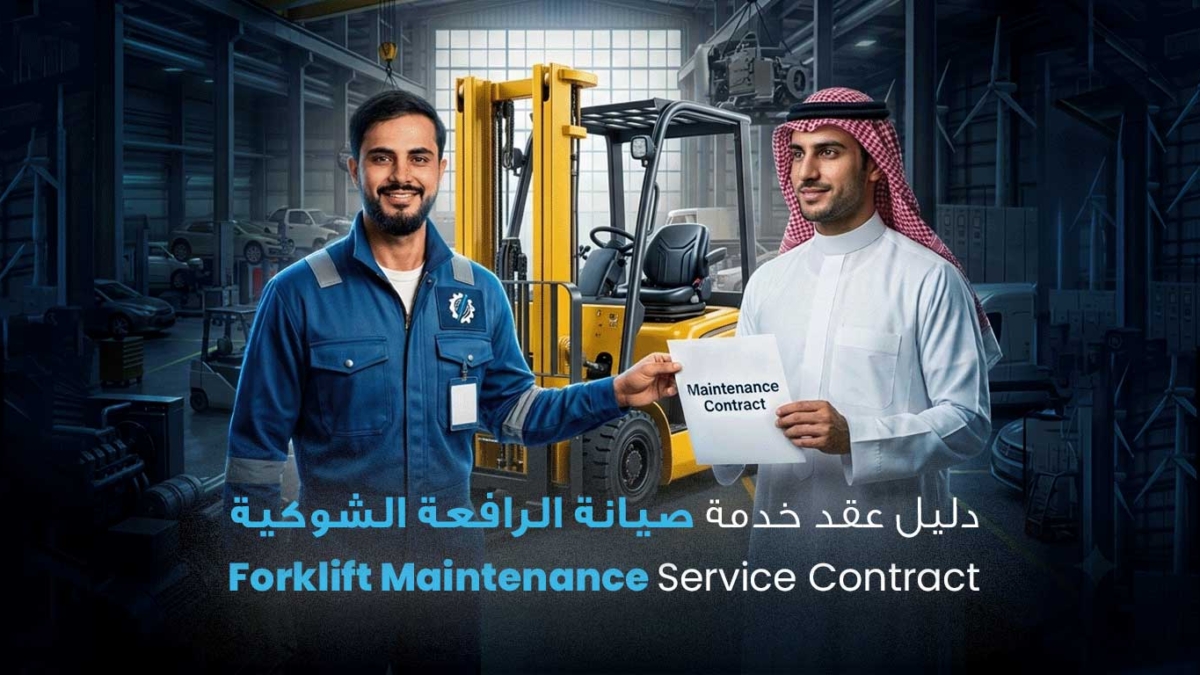
A forklift that stops in the middle of a loading cycle does more than delay one task. It affects labor, truck turnaround, warehouse flow, and safety at the same time. That is why a forklift maintenance service contract is not just a purchasing document. It is an operating decision that directly affects uptime, repair cost control, and equipment life.
For operations managers and procurement teams, the challenge is rarely whether maintenance is needed. The real question is what kind of contract gives the right level of support without paying for coverage the fleet does not need. A good agreement should match actual usage, site conditions, equipment age, and response expectations. Anything less usually turns into avoidable downtime or unclear service responsibility.
What a forklift maintenance service contract should do
At its core, a forklift maintenance service contract sets the service scope, service intervals, response expectations, and commercial terms for keeping forklifts in working condition. It should define what preventive work is included, what inspections are required, how breakdowns are handled, and which parts or consumables fall inside or outside the agreement.
The value of the contract is not only in planned service visits. It is in reducing uncertainty. Your maintenance team, operators, supervisors, and finance department all need clear expectations. When the agreement is properly written, there is less debate about who responds, how fast they respond, what gets replaced, and what the service partner is accountable for.
That matters even more in high-pressure environments where forklifts support production, yard handling, cold storage, manufacturing, logistics, or construction activity. In those operations, a maintenance delay is rarely an isolated maintenance issue. It quickly becomes a throughput issue.
Why many forklift service agreements fail
Most contract problems start before the first service visit. The wrong scope gets approved because the contract looked complete on paper but did not reflect the way the equipment actually works in the field.
A forklift running one shift indoors on smooth concrete has very different needs than a unit working outdoors, around dust, uneven surfaces, heat, or heavy attachments. The maintenance interval, component wear rate, tire condition, hydraulic stress, and battery or engine workload can change significantly. If the contract uses a generic service schedule, the result is usually one of two problems. Either the equipment is under-maintained and suffers more breakdowns, or the customer pays for unnecessary service activity.
The other common issue is vague language around exclusions. A contract may say preventive maintenance is included, but that phrase alone is not enough. Filters, fluids, hoses, tires, chains, forks, brake components, battery service, and emergency call-outs all need specific treatment. If those details are not clearly stated, the customer often discovers the gaps only after a failure occurs.
Choosing the right forklift maintenance service contract
The right forklift maintenance service contract depends on fleet size, duty cycle, in-house technical capability, and risk tolerance. There is no single best model for every operation.
A basic preventive maintenance agreement is often suitable for fleets with newer forklifts, low-to-moderate utilization, and internal staff who can manage minor checks between service visits. This type of contract usually focuses on scheduled inspections, lubrication, adjustments, fluid checks, and routine wear monitoring. It offers cost control, but it does not remove much repair risk.
A more comprehensive agreement is usually better for older fleets, multi-shift operations, or sites where downtime carries a high operational penalty. These contracts may include planned maintenance, breakdown support, labor coverage for repairs, and defined response times. They cost more up front, but they can make budgeting easier and reduce the disruption of unplanned failures.
For some operations, a hybrid model works best. The customer keeps routine daily inspections and operator reporting in-house, while the service partner handles scheduled maintenance, diagnostics, major repairs, and emergency response. That approach can be practical when the site has strong supervision but limited specialist forklift expertise.
What to include in the contract scope
The scope should be detailed enough that both parties can operate without assumptions. A strong contract typically identifies each covered forklift by model, serial number, type, and operating environment. It should also state estimated operating hours or usage patterns, because service frequency should reflect actual duty.
Preventive maintenance tasks need to be listed clearly. That includes inspection points, lubrication requirements, fluid service, chain adjustment, mast and carriage checks, brake inspection, steering checks, hydraulic assessment, and safety system review. For electric forklifts, battery condition, charging system performance, connectors, and electrical diagnostics should also be addressed. For internal combustion units, the agreement should cover engine service, cooling system checks, fuel system inspection, and emission-related items where applicable.
The contract should also define whether compliance inspections, operator safety checks, and reporting documentation are included. Many industrial buyers overlook reporting quality, but it has real value. A useful service report should show condition trends, recommended repairs, urgent findings, and parts needed. If reports are too brief or inconsistent, maintenance planning becomes reactive again.
Response time matters more than many buyers expect
A low contract price can look attractive until a critical forklift is down and no one can confirm when a technician will arrive. Response time is one of the most important commercial and operational terms in any service agreement.
For uptime-critical sites, the contract should define call-out procedures, target response times, service windows, and escalation contacts. If support is only available during standard working hours, that needs to be understood before signing. If after-hours or weekend support is available, the conditions and rates should be clear.
This is especially important for businesses operating in active logistics and industrial zones where a delayed response can affect multiple linked activities. In practice, fast technical response often matters more than a small difference in monthly contract value.
Parts coverage and exclusions
Parts are often where maintenance budgets drift. A contract may include labor for inspection and routine service while excluding major wear items and repair components. That is not necessarily a problem, but it must be understood.
The best approach is to separate parts into categories. Routine consumables, normal wear items, major components, and damage-related replacements should each be addressed. There should also be clarity on whether genuine parts, aftermarket parts, or a mix will be used, and who approves substitutions.
This matters because parts quality directly affects reliability. A low-cost part that fails early can erase any initial savings through repeat labor, additional downtime, and safety risk. On the other hand, not every application requires the most expensive option. A good service partner should help match parts selection to equipment use and operating conditions rather than applying one rule to every forklift.
Service data is part of the contract value
A forklift maintenance service contract should not only deliver labor. It should produce useful maintenance intelligence. Over time, service records reveal which units are becoming cost-heavy, which components fail repeatedly, and which operating habits are driving damage.
That information supports repair-versus-replacement decisions, budget planning, and fleet standardization. It also helps procurement teams compare contract performance more accurately. If one provider closes work orders quickly but misses recurring issues, the cost of that weakness will show up later.
For customers managing multiple units across warehousing, industrial, or project environments, service visibility is a major advantage. A dependable service partner should be able to show patterns, not just invoices.
Questions to ask before signing
Before approving any agreement, ask how service intervals are set, what response times are committed, what parts are included, and how major repairs are quoted. Ask how technician findings are documented and how urgent issues are escalated. Also ask what voids coverage, especially where operator damage, misuse, or missed inspections are concerned.
It is also worth asking whether the provider can support related needs beyond the contract itself. Diagnostics, emergency repairs, field service capability, and parts sourcing all affect real-world performance. A contract is stronger when the service provider can handle both planned maintenance and the unexpected problems that interrupt operations.
That is one reason many industrial customers prefer a maintenance partner with broader equipment support capability. A company such as Millennium Power Operations & Maintenance can be valuable in these environments because uptime problems do not always stay inside one machine category. A provider that understands heavy equipment, engines, field repairs, diagnostics, and parts logistics can often solve issues faster and coordinate support with less disruption.
When to review or renegotiate the agreement
A service contract should not remain static if fleet conditions change. If operating hours increase, equipment ages, site conditions worsen, or the number of forklifts grows, the original contract may no longer fit. Review the agreement regularly against breakdown frequency, repair cost, response performance, and equipment availability.
If the provider is meeting the written scope but the fleet is still underperforming, the issue may be contract design rather than execution. In that case, adjusting service intervals, inspections, parts strategy, or emergency coverage can produce better results than simply changing vendors.
The best forklift maintenance service contract is the one that reflects how your equipment actually works, what downtime costs your operation, and how quickly technical support needs to move when something goes wrong. When those points are handled clearly, maintenance becomes less reactive and your forklifts stay where they belong – in service, not waiting for repair.