
A standby generator rarely fails at a convenient time. It fails when a facility loses utility power, a construction site needs temporary power, or a critical process cannot stop. That is why generator maintenance vs replacement is not simply a budget decision. It is an operational decision involving uptime risk, safety, repair lead time, fuel efficiency, and the availability of dependable parts.
For operations managers, the right answer is rarely based on age alone. A well-maintained generator with a sound engine, alternator, control system, and fuel supply may deliver many more years of reliable service. A newer unit with repeated electrical faults, poor load performance, or unsupported controls may create more downtime than it is worth. The decision starts with an honest technical assessment.
Start With Generator Condition, Not Just Hours
Operating hours matter, but they do not tell the full story. A generator used for regular prime power accumulates wear differently from a standby unit that runs only during outages. A low-hour standby generator can still have serious problems if fuel has degraded, batteries have not been tested, cooling systems have been neglected, or monthly exercise runs were skipped.
A qualified inspection should review the engine, alternator, control panel, automatic transfer switch, fuel system, exhaust, cooling system, starting batteries, and load performance. Service history is equally valuable. Repeated failures involving the same subsystem often signal that the underlying cause has not been corrected.
Look closely at the pattern of repairs. One failed hose, starter, sensor, or battery does not justify replacement. These are normal service items. However, repeated overheating, low oil pressure, unstable frequency, voltage fluctuation, excessive blow-by, coolant contamination, or recurring ECU faults require a deeper decision than another quick repair.
When Generator Maintenance Is the Better Investment
Maintenance is usually the right path when the generator has a structurally sound engine and alternator, faults are isolated, and genuine or quality replacement parts remain available. Scheduled service protects the assets your operation already owns and helps prevent small defects from becoming emergency failures.
A maintenance-first approach is especially practical when repairs restore a clear, measurable condition. Replacing worn injectors can improve combustion and fuel use. Cleaning and servicing a cooling system can prevent overheating. Correcting a fuel contamination issue can protect pumps, injectors, and filters. Replacing aging batteries and chargers can eliminate common no-start events.
For many industrial generators, an engine overhaul or targeted rebuild can also be a sound alternative to complete replacement. If compression, crankshaft condition, cylinder block integrity, and supporting systems meet rebuild criteria, overhaul work may restore dependable performance at a lower cost and with less disruption than installing a new package.
Maintenance also makes sense when the generator still meets the actual load requirement. Replacing a unit simply because it is older can create an avoidable capital expense if it starts reliably, carries load correctly, and can be supported with parts and technical service.
Maintenance must be planned, not reactive
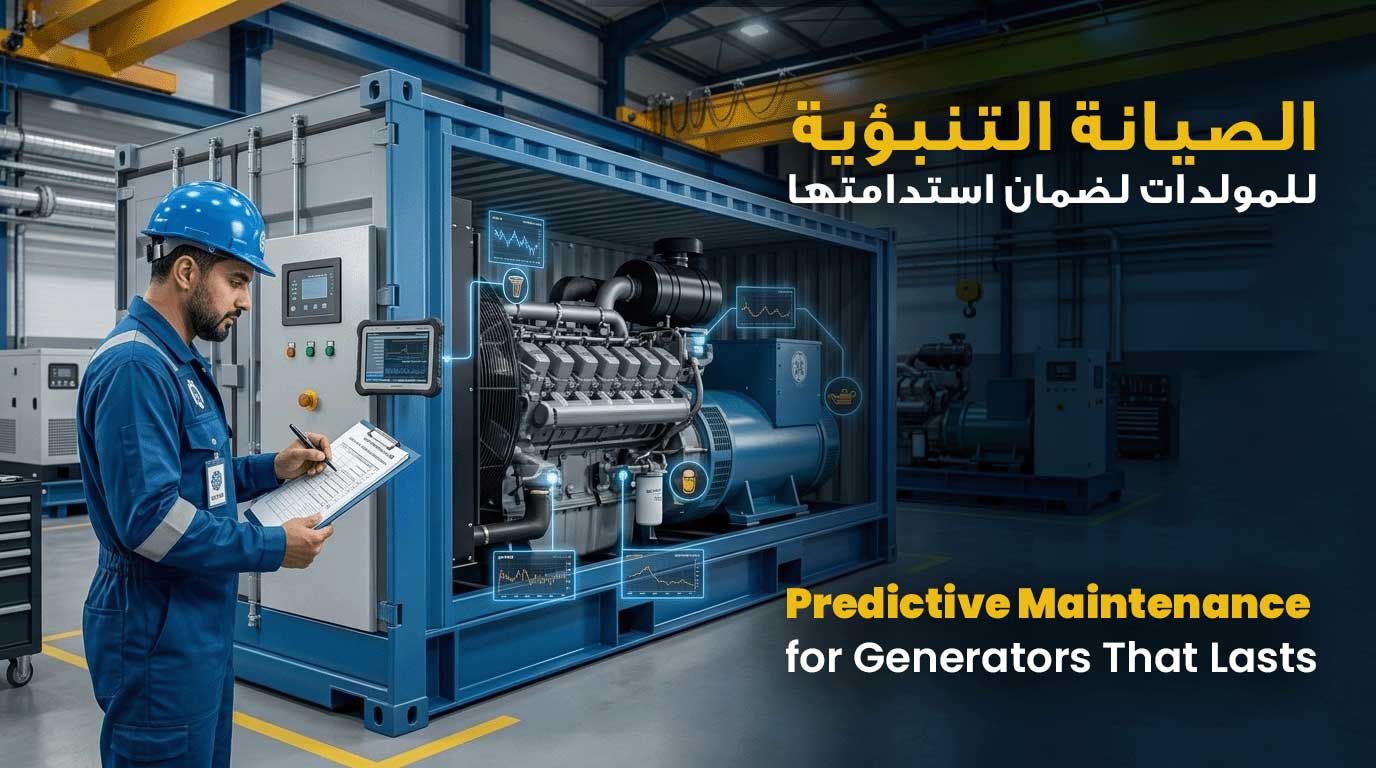
Reactive repairs can keep a generator running, but they rarely deliver the lowest lifecycle cost. A preventive maintenance plan should include regular exercising, fluid and filter service, battery testing, fuel quality checks, cooling-system inspection, belt and hose inspection, electrical connection checks, and load-bank testing where appropriate.
Load testing is particularly valuable because a generator can appear healthy while running with little or no load. Under real demand, weak injectors, restricted fuel supply, voltage regulation issues, cooling limitations, and alternator defects become visible. Testing gives maintenance teams evidence to act before an outage exposes the problem.
In the Eastern Province, high ambient temperatures, dust, and long idle periods can accelerate failures in cooling, air intake, batteries, and fuel systems. Maintenance intervals should reflect the operating environment, not just the minimum interval stated in a manual.
When Replacement Becomes the Safer Decision
Replacement becomes justified when repair costs are rising without improving reliability, when critical components are no longer supportable, or when the generator no longer meets the facility’s power and safety needs. The cost of an unreliable unit is not limited to the invoice from the repair shop. It includes lost production, delayed projects, spoiled materials, overtime labor, emergency rentals, and reputational damage.
A replacement decision deserves serious consideration when these conditions are present:
- Major engine damage such as a cracked block, severe crankshaft damage, repeated bearing failure, or extensive internal wear beyond a viable overhaul.
- Alternator or control system faults that recur after proper diagnostics and repair, especially when parts are obsolete or lead times are unacceptable.
- Frequent unplanned shutdowns that disrupt operations despite ongoing maintenance and corrective work.
- A generator that cannot carry the required load, has poor voltage or frequency stability, or no longer matches the site’s current electrical demand.
- Safety, emissions, noise, or compliance concerns that cannot be resolved through practical upgrades.
Replacement may also be the right answer after a major change in operations. A site that has added pumps, HVAC equipment, material handling systems, or expanded production may have outgrown its existing generator. Running a generator continuously near its maximum capacity increases heat, wear, and failure risk. An oversized unit can create its own problems, including inefficient operation and low-load conditions that affect diesel engine health.
Compare Total Cost of Ownership, Not Repair Cost Alone
The question should not be, “Is repair cheaper than replacement today?” The better question is, “Which option produces the lowest operational risk and cost over the next three to five years?”
Start with the estimated cost of repairs, including parts, labor, transport, testing, and expected downtime. Then compare that figure with the cost of replacement, installation, commissioning, controls integration, transfer-switch work, and operator training. Factor in fuel efficiency, warranty coverage, parts availability, and the expected service life after repair.
A repair can be financially sound even when it is substantial, provided it delivers a predictable remaining life. By contrast, several lower-cost repairs can become expensive if each one requires emergency mobilization and interrupts production. Reliability has value, particularly for facilities where backup power is mission-critical.
It is also wise to assess the cost of waiting. If a generator is already showing warning signs, postponing the decision until a total failure may remove your ability to schedule work, source the right equipment, or maintain continuity during the transition. Planned replacement gives procurement and operations teams more control than a crisis response.
Use Diagnostics to Make the Generator Maintenance vs Replacement Decision
Reliable decisions require data. Before approving a major repair or a new generator, request a documented condition assessment. This should include engine performance findings, fluid analysis when relevant, battery and charging results, cooling-system condition, fuel-system inspection, control-panel diagnostics, and load-test results.
Diagnostic findings should lead to a practical recommendation with options. For example, a generator may need immediate corrective repairs to remain operational, followed by a planned overhaul during a scheduled shutdown. Another unit may be serviceable today but require replacement planning because its controller and alternator components are becoming difficult to source.
The best recommendation is not always the most expensive one. It is the one that reflects the generator’s duty, failure history, criticality, and realistic operating environment. A generator supporting emergency lighting has different risk requirements than one supplying a data room, industrial pump station, or active construction operation.
Protect Uptime During the Transition
Whether you choose maintenance, overhaul, or replacement, the work must be managed around the facility’s operating needs. Confirm isolation requirements, transfer-switch operation, fuel availability, cabling, grounding, ventilation, exhaust routing, and commissioning tests before work begins. A new or rebuilt generator should never be considered ready based only on a no-load start.
After major repairs or installation, verify automatic start signals, transfer operation, stable voltage and frequency, full-load performance, alarm functions, and shutdown protections. Document the results and establish the next preventive maintenance date before the service team leaves site.
MPOM supports businesses that depend on critical equipment by combining generator diagnostics, preventive maintenance, engine repair, emergency response, and parts sourcing through one operational service partner. This approach helps reduce vendor delays and gives maintenance teams a clearer path from fault diagnosis to verified repair.
A generator does not need to be new to be dependable, but it does need to be proven. Make the decision before the next outage makes it for you, using condition data, lifecycle cost, and the actual consequences of downtime at your site.