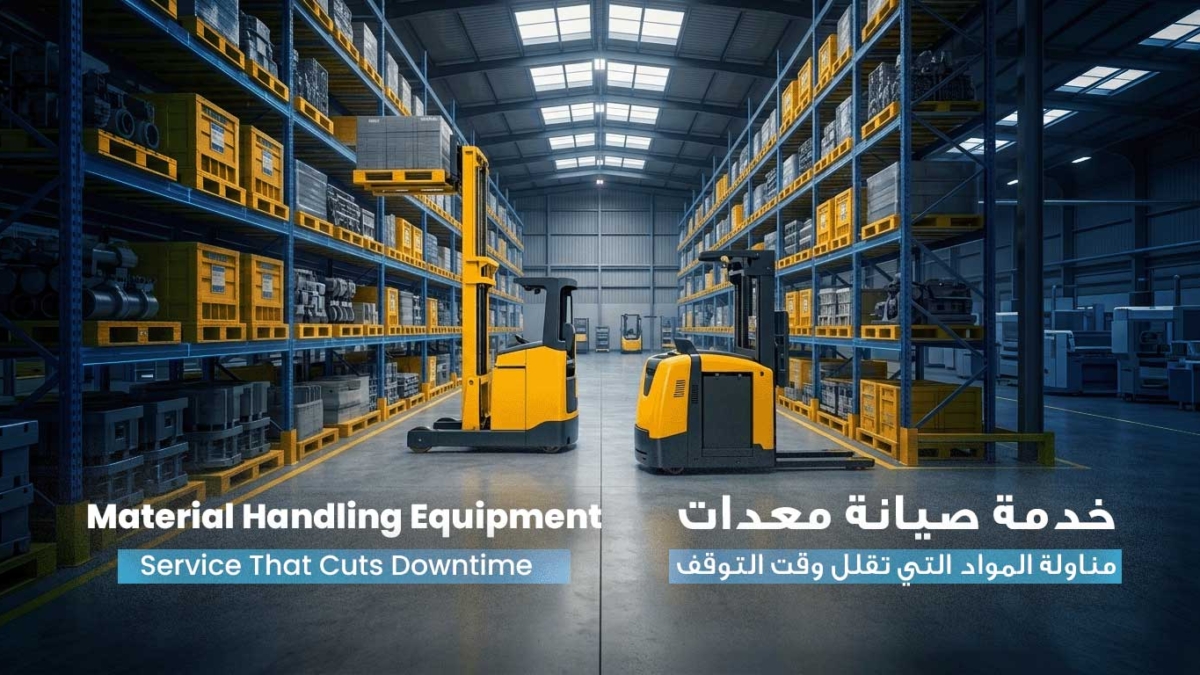
When a forklift goes down in the middle of a shift, the problem rarely stays with one machine. Loading slows, pallets stack up, drivers wait, delivery schedules slip, and safety risks increase around every improvised workaround. That is why material handling equipment service is not just a repair function. It is an uptime function that protects operations, labor efficiency, and customer commitments.
For facilities that depend on forklifts, pallet trucks, reach trucks, stackers, and other warehouse handling assets, service quality has a direct effect on output. A delayed response, weak diagnosis, or temporary fix often leads to repeat failures. A disciplined service approach does the opposite. It identifies the root cause, restores safe operating condition, and helps prevent the same issue from interrupting the next shift.
Why material handling equipment service matters more than most teams expect
Many equipment failures start small. A hydraulic leak, unusual mast movement, hard steering, battery charging issue, brake weakness, or intermittent electrical fault may seem manageable for a day or two. In practice, these early signs are often the warning stage before a more expensive stoppage.
Material handling equipment service matters because these machines work under repeated load cycles, tight turning demands, uneven floor conditions, and long operating hours. That combination puts stress on hydraulic systems, tires, brakes, chains, bearings, wiring, controls, and power units. If service is delayed, one worn component can create a chain reaction across several systems.
There is also the safety side. Material handling equipment operates around people, inventory, racking, and transport vehicles. A machine that lifts unevenly, stops poorly, or responds unpredictably is not just inefficient. It is a risk to operators, nearby personnel, and the facility itself. Good service protects uptime, but it also protects compliance and workplace safety.
What effective material handling equipment service should include
A proper service program goes beyond replacing failed parts. It starts with inspection and diagnosis. Technicians need to assess mechanical wear, hydraulic condition, electrical performance, battery or engine behavior, and operator-reported symptoms. If the diagnosis is rushed, the repair often misses the actual cause.
From there, the repair process should be practical and complete. That may include mast and chain inspection, hydraulic hose replacement, brake repair, steering correction, tire replacement, battery system checks, electrical troubleshooting, ECU or ECM diagnostics where applicable, and load-handling function testing. The final step is just as important as the repair itself – confirming the machine is safe to return to work under normal site conditions.
The strongest service providers also support parts sourcing. This matters more than many procurement teams realize. A technically correct repair can still become an operational failure if parts delays keep equipment parked for days. Having one maintenance partner that can diagnose, repair, and source genuine or suitable aftermarket parts reduces handoffs and shortens downtime.
Breakdowns vs. preventive service
Reactive repair will always be necessary. Hoses burst, batteries fail, connectors corrode, and wear parts reach end of life. But if most service activity starts only after breakdown, maintenance costs usually rise over time.
Preventive service changes that pattern. Instead of waiting for a machine to stop, technicians inspect critical wear points and service intervals before failure affects production. Fluids are checked, filters are changed, chain tension is reviewed, mast rollers are inspected, brakes are tested, tires are assessed, and electrical systems are checked for heat, looseness, or damage.
This does not mean every fleet needs the same schedule. It depends on duty cycle, load weight, environment, operator behavior, and machine age. A forklift working long hours in a high-traffic warehouse needs a different maintenance rhythm than a lightly used unit in a controlled indoor setting. The right plan is based on usage reality, not a generic calendar.
Common problems that should never be ignored
Certain symptoms should trigger service attention immediately. Slow lifting often points to hydraulic issues, worn seals, low fluid, or pump inefficiency. Jerky mast movement can indicate contamination, chain wear, or control valve problems. Poor braking may relate to pads, hydraulic pressure, or mechanical adjustment, and it should never be left until the next planned service.
Electrical faults are another area where temporary fixes cause bigger problems later. Intermittent starting, dead displays, warning lights, charging issues, or sudden power loss can come from damaged wiring, sensor failure, controller problems, or weak battery performance. These issues can be difficult to trace without proper diagnostics, especially when the fault appears only under load or during extended operation.
Unusual noise also deserves attention. Grinding, squealing, knocking, or vibration during travel and lifting often signals wear in bearings, wheels, tires, hydraulic components, or steering assemblies. When operators report these changes early, service teams have a better chance to fix the issue before it causes collateral damage.
What to look for in a service partner
For most industrial operations, the real question is not whether service will be needed. It is whether the service partner can respond fast, diagnose correctly, and support the equipment over time.
A capable provider should have field service capacity for urgent callouts and workshop support for heavier repair work. That flexibility matters because not every job belongs on-site. Some faults can be resolved quickly in the field. Others require controlled inspection, deeper disassembly, or more extensive rebuild work.
Technical range also matters. Material handling fleets often include machines with mixed systems – diesel, LPG, or electric power, conventional mechanical components, hydraulic lifting systems, and increasingly sophisticated electronic controls. A service partner that understands only one layer of the machine can slow down the repair process. One that can handle mechanical, hydraulic, and electronic diagnostics under one roof usually delivers faster recovery.
Consistency is another factor that gets overlooked during vendor selection. Emergency response is critical, but long-term maintenance discipline is what reduces emergency events in the first place. Service records, recurring issue tracking, scheduled inspections, and realistic parts planning all contribute to better fleet reliability.
The cost of delayed service
Some delays happen for understandable reasons. Sites are busy, approvals take time, and equipment may appear to be operating well enough to finish the week. But delayed service often costs more than planned repair.
The direct cost is straightforward: more damaged parts, longer repair time, and greater risk of complete stoppage. The indirect cost is usually higher. That includes operator idle time, interrupted loading schedules, delayed dispatch, rented replacement equipment, missed production targets, and possible product handling issues.
There is also a budget planning issue. Preventive service is easier to forecast. Emergency breakdowns are not. When maintenance is pushed back repeatedly, spending tends to become less controlled and more reactive. For operations managers and procurement teams, that creates pressure on both performance and cost control.
Service planning for high-uptime operations
The best service strategy is practical, not excessive. Start with the equipment that carries the most operational risk if it fails. That usually means the forklifts or handlers tied to shipping, receiving, production supply, or critical internal movement.
Then review the operating pattern. How many hours are being logged? What loads are typical? Is the equipment working indoors, outdoors, or both? Are there heat, dust, moisture, ramp, or floor-condition factors that increase wear? These conditions should shape maintenance intervals and inspection priorities.
It also helps to capture operator feedback in a disciplined way. Operators notice sluggish hydraulics, steering drift, warning alarms, or charging issues before management sees a maintenance report. If those observations are documented and reviewed early, service teams can intervene before a full breakdown occurs.
For companies managing fleets in Dammam, Dhahran, Khobar, preferably Eastern Province, response time can make a major difference when material handling equipment is tied to daily movement targets.
Working with a maintenance partner that can provide both urgent repair and scheduled support reduces the operational gap between failure detection and equipment recovery.
A stronger standard for equipment uptime
Material handling equipment service should be measured by more than whether a machine starts working again. The better standard is whether the repair was accurate, whether the machine returned to safe and dependable operation, and whether the same fault is less likely to interrupt the next shift.
That requires technical discipline, responsive support, and a service partner that understands what downtime actually costs in the field. MPOM approaches service with that operational mindset – fast diagnosis, practical repair, and maintenance support built around keeping critical equipment in service.
If your handling equipment is showing early warning signs, the right time to act is before the next interruption forces the decision for you.