A failed generator during a facility outage, a disabled forklift at a loading bay, or a water pump stopping on an active site creates the same immediate question: who can restore the equipment safely, correctly, and fast? An emergency repair provider review should answer that question before the failure occurs, not while your team is losing production hours.
For operations managers and maintenance teams, the lowest callout rate is rarely the deciding factor. The right provider reduces the total cost of the incident by arriving prepared, diagnosing accurately, securing parts, and returning the asset to dependable service without creating a repeat failure.
Emergency Repair Provider Review: Start With Response Capability
Emergency support is only useful when the provider can mobilize under real site conditions. Ask how emergency calls are received, who makes the initial technical assessment, and what information the provider needs before dispatching a technician. A vague promise of quick service is not the same as an operational response process.
A capable provider should be able to clarify the equipment type, fault symptoms, location, operating status, safety restrictions, and immediate site access requirements. This enables the service team to send the appropriate technician, diagnostic equipment, tools, and likely replacement parts on the first visit.
Response time also depends on geography and workload. A provider serving Dammam, Dhahran, Khobar, Jubail, and Alahsa should be transparent about realistic mobilization times across the Eastern Province. Ask for typical response ranges, but also ask what happens when multiple customers have urgent breakdowns at the same time. Their answer will reveal whether they have a dispatch discipline or simply react as resources become available.
1. Verify Technical Coverage Before the Breakdown
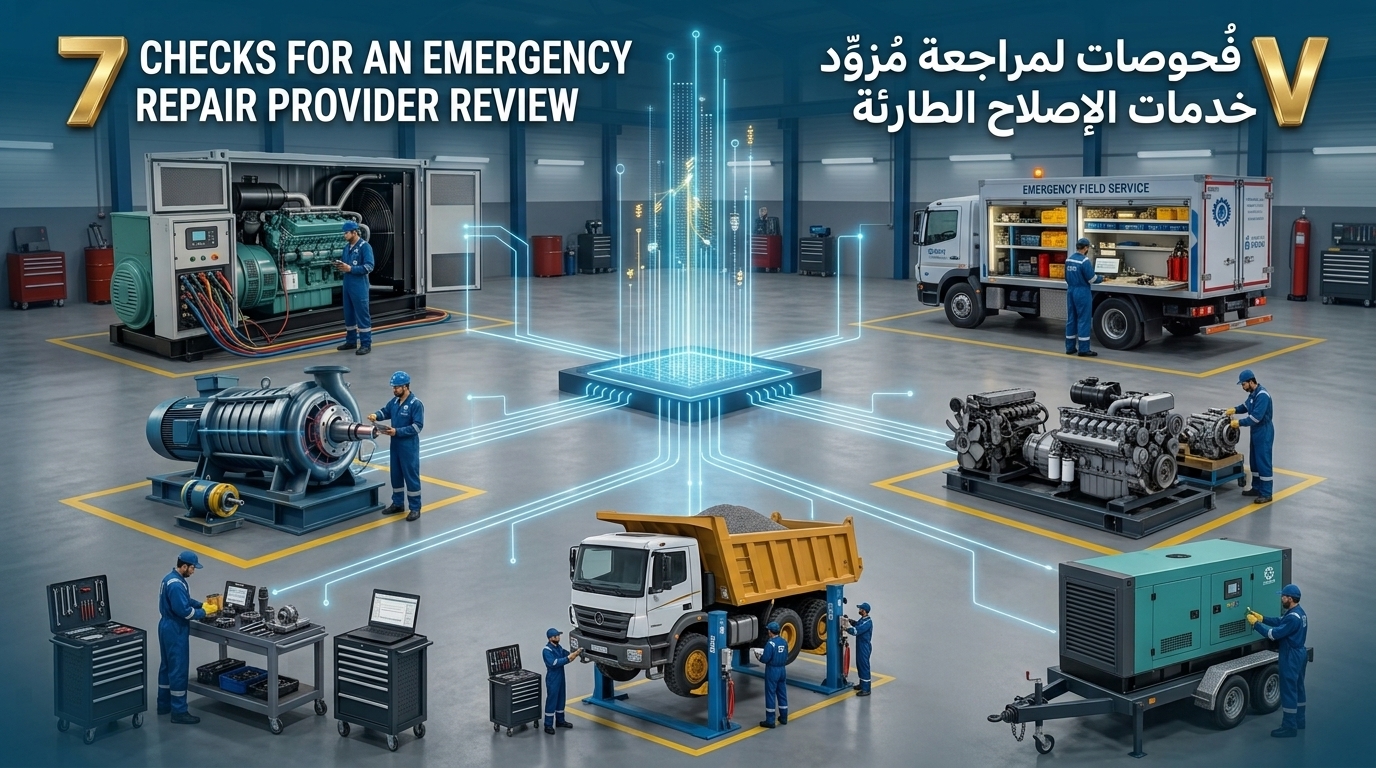
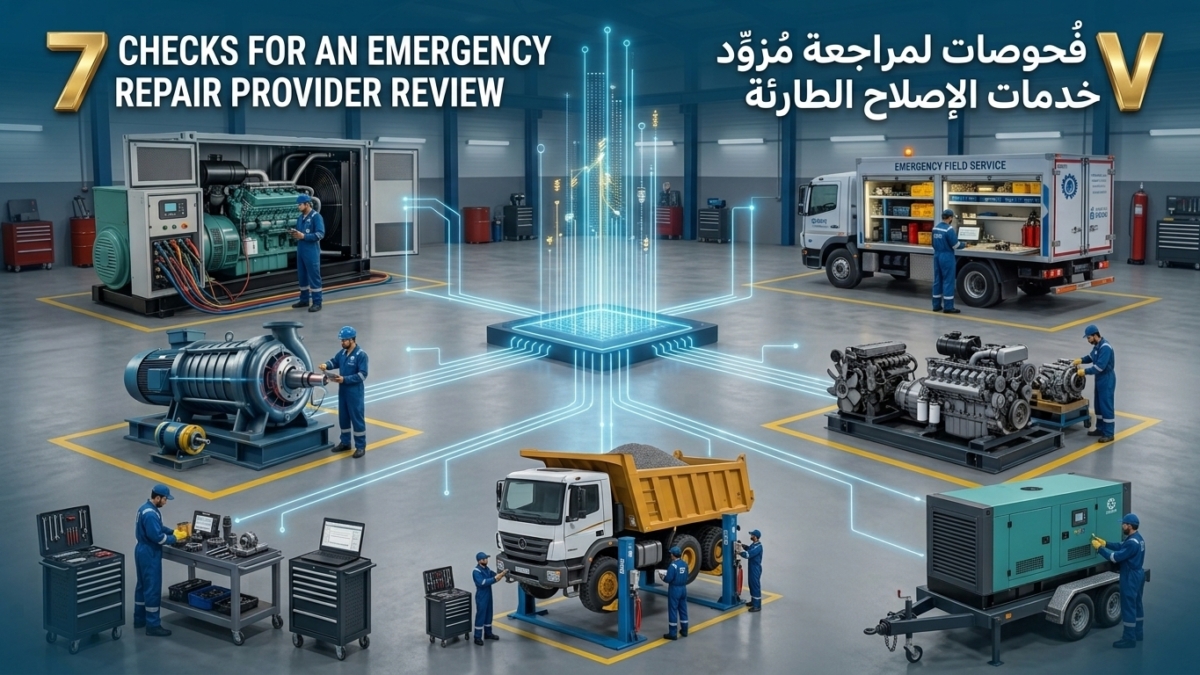
An emergency repair provider should have proven capability across the assets that matter to your operation. This may include diesel generators, heavy equipment, trucks, forklifts, material handling equipment, industrial water pumps, engines, and fuel-system components.
Broad capability is valuable because equipment failures do not always stay within one trade. A generator shutdown may involve mechanical wear, fuel contamination, injector issues, battery failure, electrical faults, or an electronic ECU or ECM problem. A provider limited to one narrow repair category may diagnose the symptom but still require another vendor to finish the work.
That said, broad service offerings only help when supported by specialists. Ask who performs engine overhaul work, electronic diagnostics, pump repair, and field service. Confirm whether the provider has the correct diagnostic tools and technical experience for your equipment brands and engine platforms. A general mechanic with no access to machine data can waste critical hours replacing parts by trial and error.
2. Assess the Diagnostic Method, Not Just the Repair Promise
The quality of an emergency repair depends on the quality of the diagnosis. Fast work that addresses the visible failure while missing the root cause can put the same machine out of service days later.
During your review, ask how the provider documents fault findings. Strong service teams inspect the operating condition, test relevant systems, identify the failed component, and explain whether that component is the root cause or the result of another problem. For example, replacing a damaged injector may restore an engine temporarily, but the underlying cause could be contaminated fuel, a faulty pump, improper filtration, or an electrical control issue.
Look for a provider that can distinguish between an immediate recovery repair and a permanent corrective repair. Sometimes the right operational decision is to make the equipment safe, restore limited service, and schedule a controlled follow-up repair when parts or workshop capacity are available. That can be appropriate, provided the risk, limitation, and next step are clearly documented.
3. Review Parts Access and Quality Controls
Parts availability often determines whether an emergency repair takes hours or days. Your provider should have a clear sourcing process for genuine and quality aftermarket parts, including filters, belts, hoses, seals, pumps, injectors, electrical components, and engine service items.
Ask what parts are commonly held for emergency work and how the provider manages urgent items that are not in stock. A reliable partner will not promise immediate availability for every component. Instead, they will explain their supplier network, sourcing lead times, substitute-part policy, and approval process.
Part quality matters as much as speed. Low-quality components may appear to reduce the immediate repair bill but can increase repeat failures, safety risk, and warranty disputes. Your review should confirm that the provider identifies the part specification, provides options where appropriate, and obtains approval before fitting alternatives.
4. Check Safety and Site Readiness
Emergency work takes place under pressure, which is exactly when safety controls must remain firm. A repair provider should be prepared to work within your site rules, permit requirements, isolation procedures, and access controls.
Ask how technicians manage lockout and tagout, lifting activities, hot work, fuel handling, battery isolation, and testing after repair. For heavy equipment and generator work, technicians must understand the hazards created by stored energy, rotating components, electrical systems, hot surfaces, and uncontrolled machine movement.
A provider that rushes past safety questions to get a job started may create a larger operational problem than the original breakdown. The best teams move quickly because they have a disciplined process, not because they ignore it.
5. Evaluate Communication During the Incident
Operations teams need clear information while equipment is down. The provider should communicate the status of the job in practical terms: technician dispatched, initial assessment complete, fault identified, parts required, estimated repair path, testing underway, and equipment released.
Avoid providers who only contact you when they need a purchase order or when the invoice is ready. The right partner gives your supervisor enough information to manage production, logistics, staffing, and customer commitments while the repair is underway.
Communication should also be technically useful. A good repair report records the symptoms, findings, work performed, parts installed, test results, and recommendations. This record becomes valuable when reviewing recurring faults, planning a rebuild, or deciding whether the asset needs a preventive maintenance intervention.
6. Look Beyond the Callout to Repeat-Failure Prevention
An emergency repair provider can be a short-term contractor or a long-term maintenance partner. The difference becomes clear after the equipment is running again.
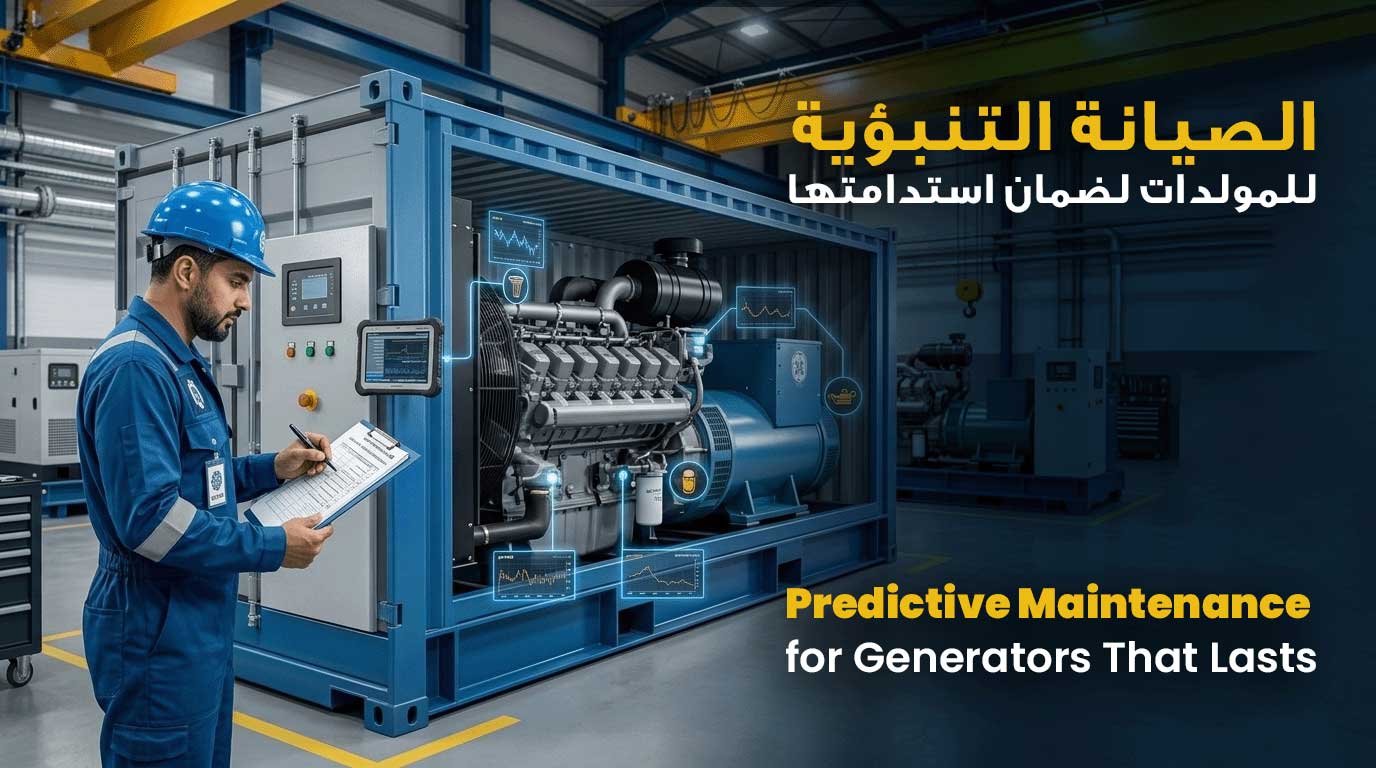
Ask whether the provider reviews failure trends and recommends actions that reduce future downtime. For a fleet, this may mean scheduled inspections, fluid analysis, cooling-system checks, battery testing, or fuel-system service. For generators, it may involve load testing, controls checks, and planned replacement of age-sensitive components. For forklifts and material handling assets, it can include brake, hydraulic, tire, and charging-system inspections.
Preventive work is not automatically the right answer for every asset. Older equipment with limited remaining service life may require a different spending decision than a mission-critical machine supporting a major project. A credible provider explains the options, risks, and expected value instead of pushing the same maintenance package for every customer.
7. Confirm Accountability After the Repair
Before appointing a provider, clarify who owns the result. Confirm the scope of work, labor and parts warranty terms, testing requirements, and process for reporting a post-repair issue. Accountability should be clear even when a breakdown involves aging equipment, pre-existing damage, or a customer-supplied part.
The provider should also be willing to explain what was not repaired. If an emergency job restores operation but reveals additional wear or a developing fault, that limitation should appear in the service report. Clear documentation protects both parties and helps your team make informed maintenance decisions.
Millennium Power Operations & Maintenance supports uptime-critical equipment with field diagnostics, mechanical and electronic repair capability, emergency response, rebuild support, and spare-parts sourcing under one service relationship. That combination can reduce handoffs when a failure crosses mechanical, electrical, fuel, or controls systems.
The most useful emergency repair provider review is completed while your equipment is operating normally. Qualify the response process, technical depth, parts support, safety practices, and reporting standards now, then keep the provider’s contact path and equipment records ready for the moment your operation cannot afford to wait.