Power outages can happen without warning, and when they do, your generator becomes one of the most important assets for your home, business, construction site, hospital, or industrial facility. However, a generator is only reliable when it is properly maintained.
One of the most common questions generator owners ask is: “When should I service my generator?”
The answer depends on several factors, including operating hours, usage frequency, environmental conditions, and manufacturer recommendations. In this guide, we’ll explain when generator servicing should be performed and why regular maintenance is essential for long-term reliability.
Why Generator Servicing Is Important
Generators are designed to provide dependable backup power, but like any engine-driven equipment, they require routine maintenance to perform efficiently.
Regular servicing helps:
- Prevent unexpected breakdowns
- Extend equipment lifespan
- Improve fuel efficiency
- Reduce costly repairs
- Ensure reliable performance during emergencies
- Maintain safety and compliance standards
Neglecting maintenance can lead to issues such as battery failure, overheating, fuel contamination, coolant leaks, reduced power output, and even complete generator failure during critical situations.

How Often Should a Generator Be Serviced?
1. Follow Operating Hours
A general rule for most diesel generators is:
- Basic inspection: Weekly or monthly
- Minor service: Every 250 operating hours
- Standard maintenance service: Every 500 operating hours
- Major service: Every 1,000 to 2,000 operating hours
Generators operating in demanding environments may require more frequent servicing.
2. Service Annually Even If It Is Rarely Used
Many standby generators remain idle for long periods and are only used during emergencies. Even if your generator has accumulated very few operating hours, an annual maintenance service is strongly recommended.
Components such as batteries, fuel systems, belts, hoses, and fluids can deteriorate over time regardless of usage.
3. Service Before Peak Demand Seasons
Facilities that depend heavily on backup power should schedule preventive maintenance before periods of increased power demand.
Examples include:
- Summer months with high electrical loads
- Critical healthcare operations
- Construction projects
- Manufacturing facilities
- Commercial buildings and shopping malls
A pre-season inspection can identify potential issues before they become costly failures.

Warning Signs Your Generator Needs Immediate Servicing
Do not wait for the next scheduled maintenance if you notice any of the following:
Difficulty Starting
If the generator struggles to start or fails to start consistently, the battery, fuel system, or starter components may require attention.
Excessive Smoke
Black, blue, or white exhaust smoke can indicate combustion problems, fuel issues, or engine wear.
Fluid Leaks
Oil, coolant, or fuel leaks should be inspected immediately to prevent major engine damage.
Unusual Noises or Vibrations
Knocking sounds, rattling, or excessive vibration may indicate mechanical issues that require professional diagnosis.
Overheating
High operating temperatures can lead to severe engine damage if not addressed promptly.
Reduced Power Output
If the generator cannot handle normal loads or experiences voltage fluctuations, servicing should be scheduled as soon as possible.
What Happens During Generator Maintenance?
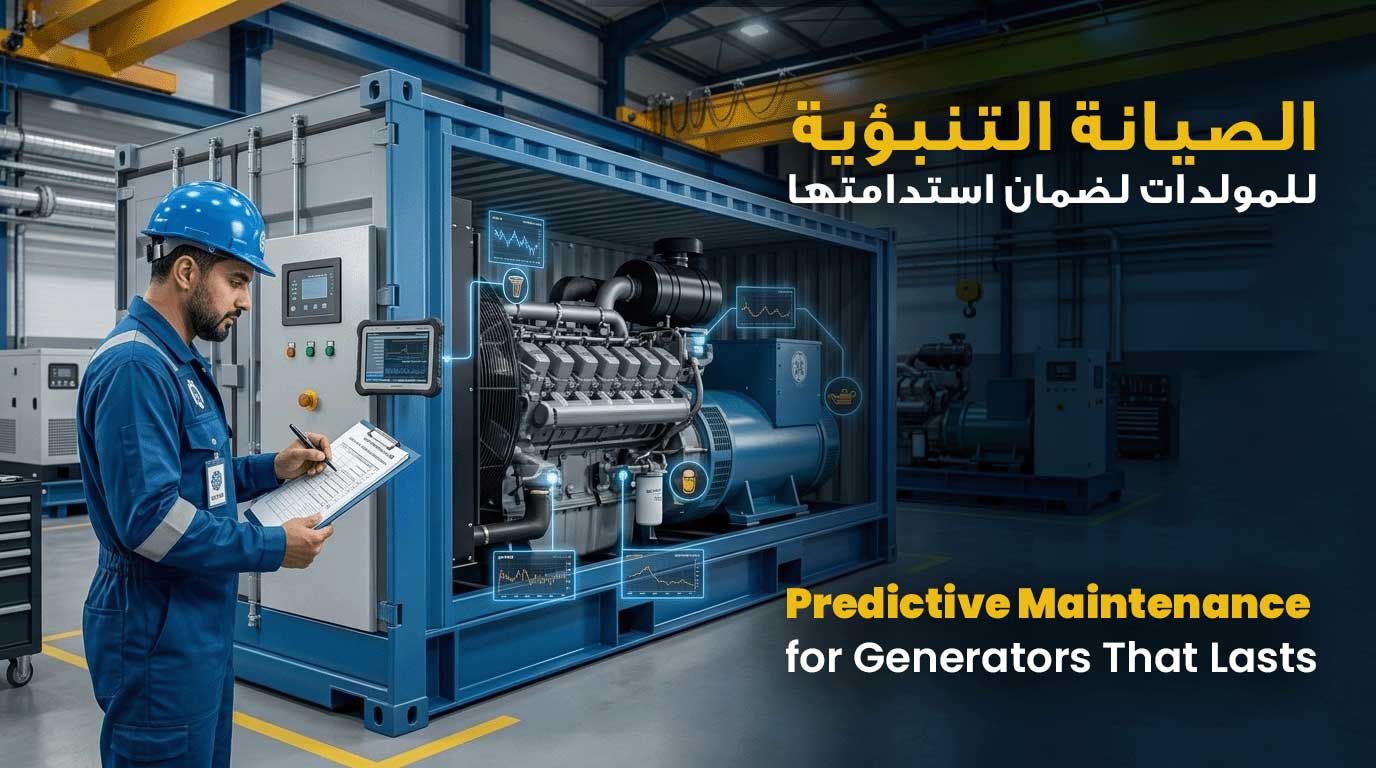
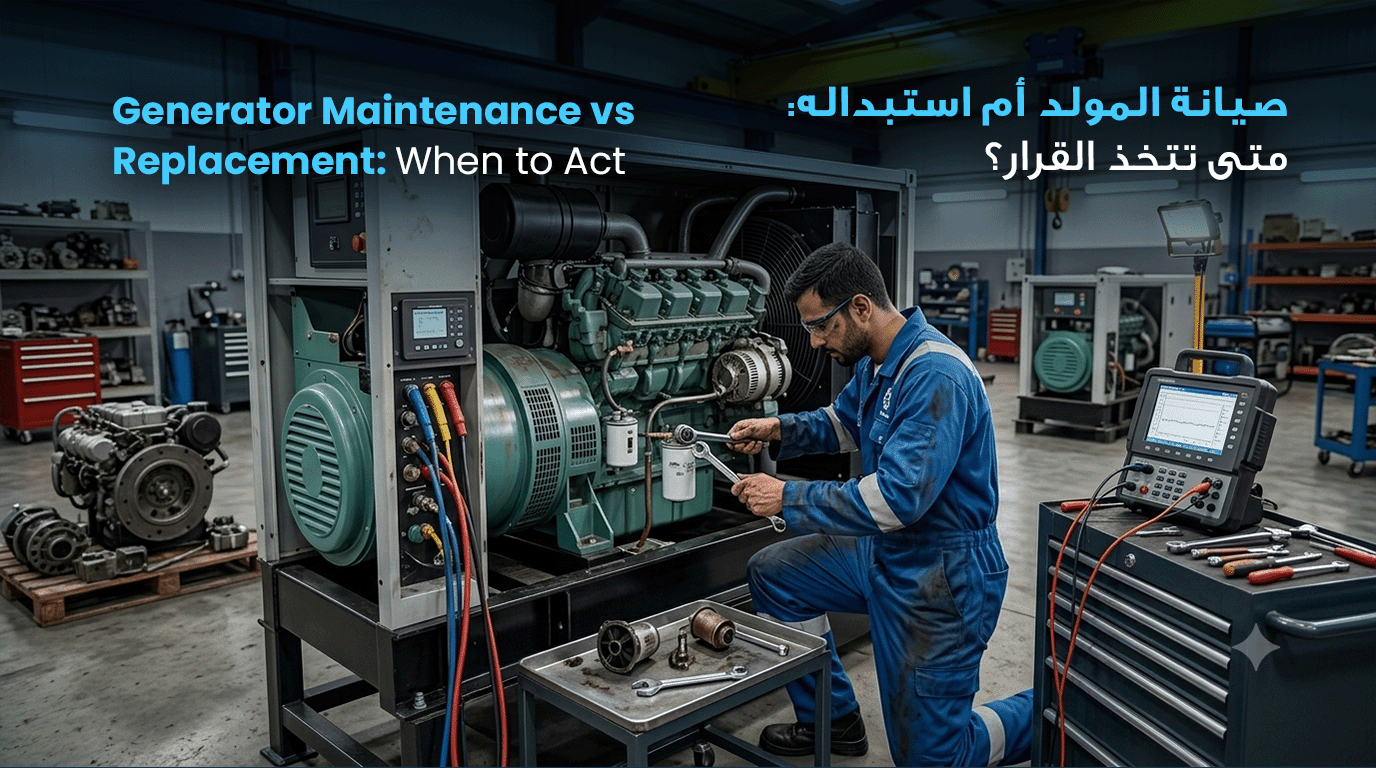
A professional generator service typically includes:
- Engine oil replacement
- Oil filter replacement
- Fuel filter inspection or replacement
- Air filter inspection or replacement
- Coolant level inspection
- Battery testing
- Belt and hose inspection
- Fuel system inspection
- Electrical connections check
- Control panel testing
- Load testing
- General performance evaluation
These inspections help identify small issues before they become expensive repairs.
The Cost of Delaying Generator Maintenance
Many generator failures occur because routine maintenance was postponed.
A relatively inexpensive preventive maintenance visit can help avoid:
- Emergency repair costs
- Extended downtime
- Production losses
- Project delays
- Equipment replacement expenses
For businesses that rely on continuous power, preventive maintenance is often significantly more cost-effective than emergency repairs.
Generator Maintenance Tips for Owners
To maximize generator reliability:
- Conduct regular visual inspections
- Keep maintenance records
- Run standby generators periodically
- Monitor fluid levels
- Keep the unit clean and free from debris
- Use high-quality fuel and lubricants
- Schedule routine professional inspections
These simple practices can significantly extend generator lifespan and improve performance.
Conclusion
So, when should you service your generator?
For most generators, servicing should be performed every 250 to 500 operating hours, at least once annually, and immediately whenever warning signs appear. Regular maintenance ensures reliable operation, minimizes downtime, and protects your investment.
Regular maintenance is the key to preventing unexpected breakdowns, costly repairs, and operational downtime. At MPOM, we specialize in generator maintenance, troubleshooting, repairs, and operational support for industrial, commercial, and residential clients throughout Saudi Arabia.
Whether your generator is due for routine servicing or showing signs of performance issues, our team is ready to help. Contact MPOM today and let our experts keep your generator reliable, efficient, and ready when it matters most.
Millennium Power Organization — Technical Expertise, Genuine Parts, Reliable Service.