Emergency generator repair service for fast fault diagnosis, safe recovery, and reduced downtime for industrial and commercial operations.
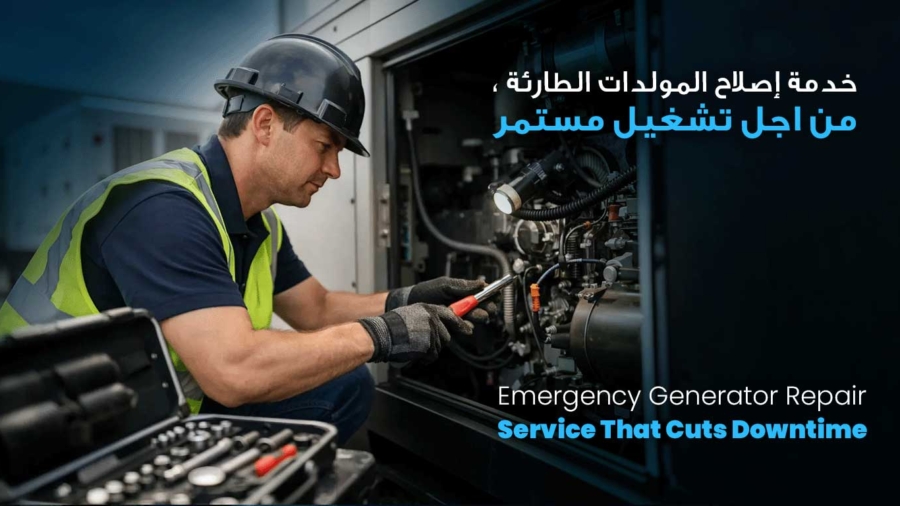
Emergency generator repair service for fast fault diagnosis, safe recovery, and reduced downtime for industrial and commercial operations.
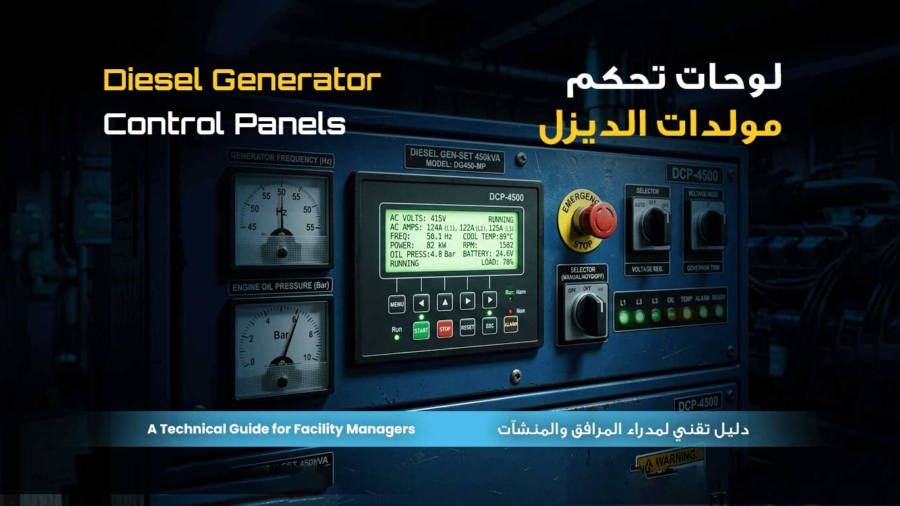
When a backup generator fails at a hospital, factory, or hotel, the cause is rarely the engine itself. In more than 60% of the cases we handle at Millennium Power Company, the fault lies in the control panel — the electronic brain that manages starting, protection, and load transfer.
Control systems have evolved dramatically over the last decade, yet many operators still treat them as sealed black boxes. That misunderstanding costs facilities downtime and expensive failures that could have been avoided with proper programming or a timely upgrade.
1. Manual Start — Legacy systems requiring human intervention for every start and stop. Still found at some temporary construction sites.
2. Auto Mains Failure (AMF) — Senses interruption of the utility supply (Saudi Electricity Company / SEC) and starts the generator automatically. The standard choice for hotels and smaller hospitals.
3. Automatic Transfer Switch (ATS) — Transfers loads between mains and generator without human intervention, with a programmed time delay. Mandatory for critical facilities.
4. Synchronization and Paralleling — Operates several generators together, or in parallel with the utility grid. Essential for data centers, large hospitals, and refineries.
The most widely deployed brand in the Eastern Province. Common models:
Premium-tier, frequently specified in large industrial installations:
Very common on Chinese-built gensets imported into KSA:
Any credible controller must provide at a minimum the following protections:
| Protection | Purpose | Consequence if Missing |
| Over/Under Speed | Engine protection | Crankshaft damage |
| Over/Under Voltage | Load protection | Burnout of electric motors |
| Over/Under Frequency | Sensitive load protection | Electronics equipment failure |
| Low Oil Pressure | Engine protection | Bearing and crankshaft damage |
| High Coolant Temperature | Engine protection | Cylinder head cracking |
| Overload | Generator protection | Stator winding burnout |
| Reverse Power | Paralleling systems | Generator destruction |
The most frequent issues we diagnose in our workshop:
Fail to Crank/Start — incorrect cranking time parameter, faulty RPM pickup sensor, weak starter battery, or defective fuel solenoid.
False Overheat Shutdown — faulty temperature sensor, or incorrectly programmed set point.
Failure to Transfer — defective ATS contactors, or incorrect mains detection settings.
Random Shutdown — voltage instability, sensor malfunction, or electromagnetic interference (EMI) from nearby equipment.
Battery Fault with Healthy Charging — wrong charging voltage parameter set in the controller.
When we receive a new generator for installation, factory programming is rarely suited to local conditions:
At MPOM we program and tune controllers using official manufacturer tools: DSE Configuration Suite, ComAp InteliConfig, Smartgen configurators, plus OEM utilities such as Cummins InPower and Perkins PEDS.
| Condition | Repair | Replace / Upgrade |
| Controller age < 8 years, isolated fault | ✅ | — |
| Controller age > 12 years | — | ✅ |
| Spare parts no longer available | — | ✅ |
| No support for Modbus TCP / Ethernet | — | ✅ |
| Faults only in external sensors | ✅ | — |
| Need for remote / IoT monitoring | — | ✅ |
Upgrading from a legacy controller (e.g., DSE 7220 to DSE 7320 MKII) typically delivers: better self-diagnostics (event log), remote cloud monitoring, and 5–12% fuel savings through improved operating logic.
Millennium Power Company (MPOM) — Specialists in diesel generator maintenance and control systems in Dammam and the Eastern Province.

In the industrial sector of Saudi Arabia’s Eastern Province, heavy-duty trucks and construction equipment represent assets worth hundreds of thousands — sometimes millions — of riyals. When a Volvo FH16 hauler or a Caterpillar 320D excavator sustains collision damage, severe corrosion, or paint deterioration, repair is not a cosmetic decision. It is an operational one that directly impacts:
This is precisely why passenger-car body shops are the wrong choice for trucks and heavy equipment. The sheet metal gauge, the industrial paint systems, the welding capacity, and the workshop dimensions are fundamentally different.
Modern European truck cab panels range from 0.8 mm to 1.2 mm in exterior areas and up to 3 mm in structural members. Tipper bodies, tanker shells, excavator booms, and loader arms require welding and forming equipment with significantly higher capacity than passenger vehicles.
Standard automotive paint cannot withstand the operating conditions of the Eastern Province:
Trucks and heavy equipment require a multi-layer industrial paint system: Etch Primer → Epoxy Primer → 2K Polyurethane Topcoat → Clear Coat (where applicable). Surface preparation must meet SA 2.5 standard at minimum.
Lifting a 6×4 truck weighing 26 tonnes or a 20-tonne excavator requires gantry cranes and overhead lifts rated for 10–20 tonnes. Spray booths must accommodate full vehicle length, including trailers.
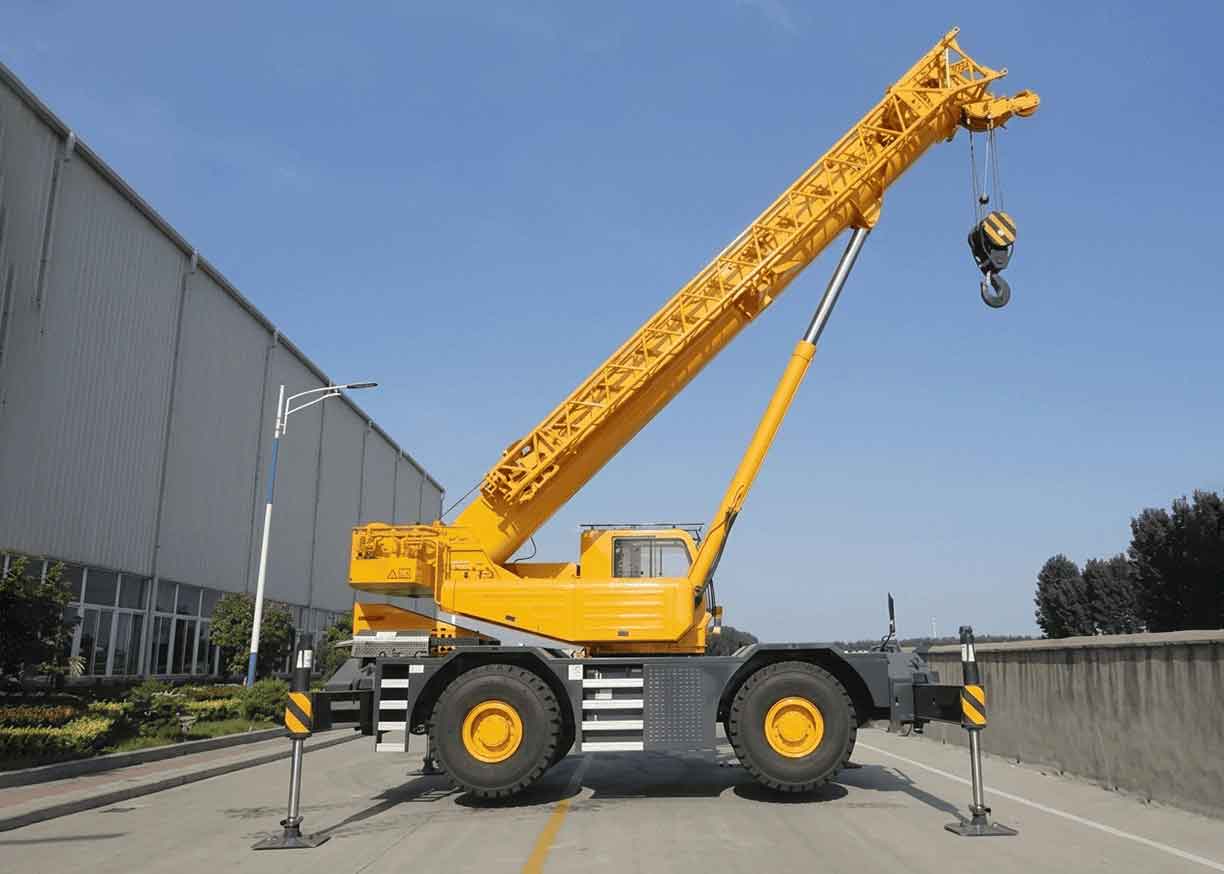
Our Dammam workshop handles comprehensive body and paint work for both trucks and heavy equipment:
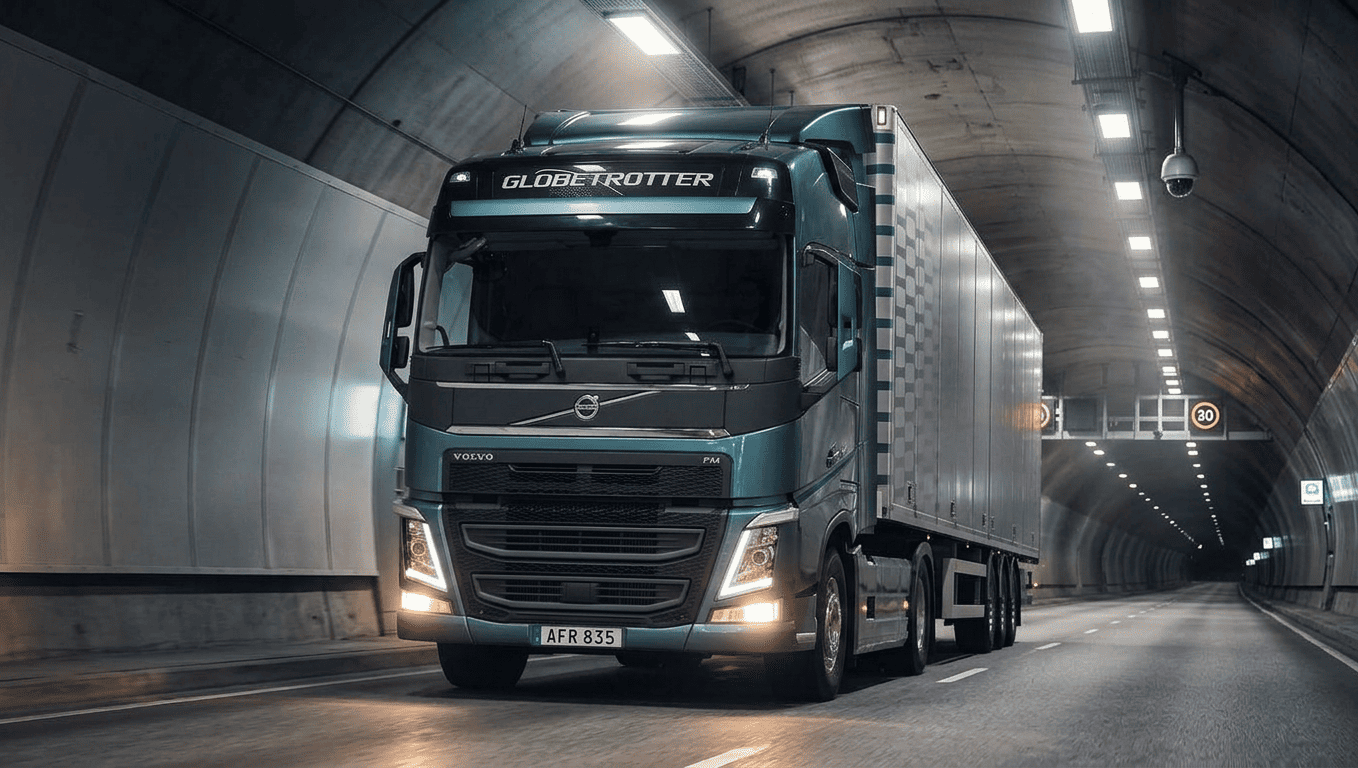
We follow a disciplined methodology for every repair job:
1st Stage: Assessment and Diagnosis — on-site or in-workshop inspection, photographic documentation, damage estimation, and a detailed quotation separating materials, labor, and timeline.
2nd Stage: Mechanical Preparation — removal of damaged sections, replacement or repair of structural members, professional MIG/MAG welding, and visual or dye-penetrant inspection of welds on critical structural repairs.
3rd Stage: Surface Preparation — sandblasting or mechanical grinding to clean metal, chemical treatment to neutralize residual corrosion, and Etch Primer application within the permissible re-oxidation window.
4th Stage: Paint System Application — primer coats applied per manufacturer specification, temperature-controlled curing, multi-layer basecoat application, and clear coat where required. Final dry film thickness measured with calibrated DFT gauges.
5th Stage: Quality Assurance and Handover — final inspection with the customer or fleet representative, before/after photographic documentation, and a written warranty covering both workmanship and materials.
Our location provides practical advantages for Eastern Province operators:
| Condition | Repair | Replace |
| Surface damage, structure intact | ✅ | — |
| Structural deformation, rear cabin | If cost < 60% of cabin value | If > 60% |
| Limited surface corrosion | ✅ | — |
| Structural frame corrosion | Engineering evaluation required | Often necessary |
| Damaged excavator boom | Specialized welding | If base metal cracked |
We always recommend an independent assessment before committing to replacement. Many pieces of equipment return to service at less than 30% of replacement cost.
Detailed quotations issued within 24 hours for most cases.
Millennium Power Company (MPOM) — Specialists in heavy truck, construction equipment, and diesel generator maintenance in Dammam and the Eastern Province.

When you need to purchase a generator for a project, factory, hospital, or residential tower, you face a direct practical question: should you buy a brand-new OEM generator through an authorized dealer, or go with a remanufactured unit at a lower price? The decision is not straightforward — the right answer depends on your application, budget, and what you expect from the machine over the long term.
In this article, we lay out the real differences objectively, based on our hands-on experience in generator maintenance and supply in the Eastern Province of Saudi Arabia.
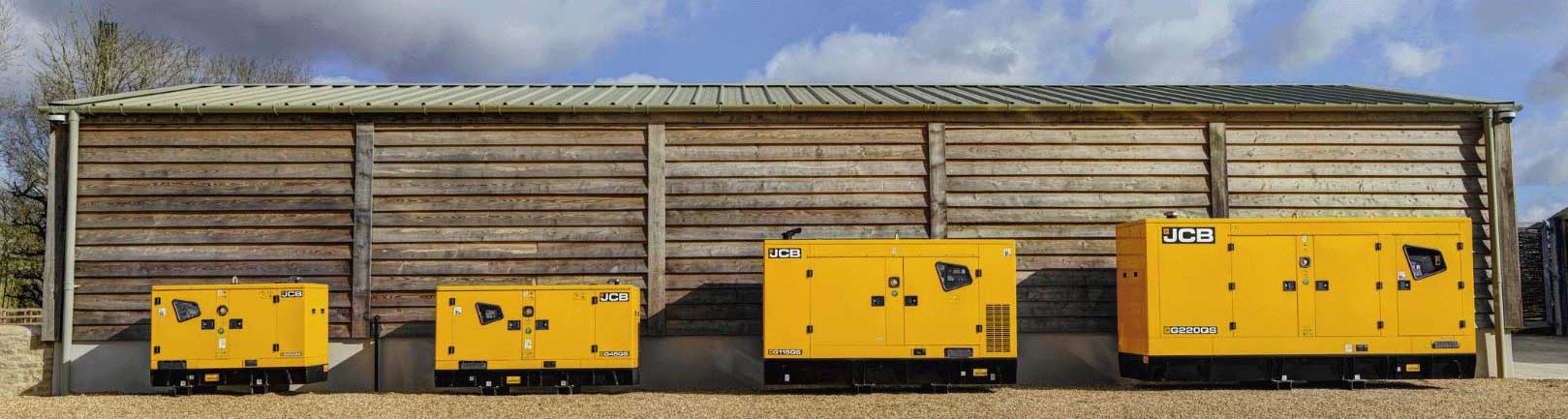
A brand-new OEM generator is manufactured entirely at the original factory using 100% new components, delivered with an official warranty through an authorized dealer. Major brands in this segment include Cummins, Perkins, MTU, Kohler, Doosan, Caterpillar, and Volvo Penta.
| Advantages: | Disadvantages: |
| All components are new and have never been operated | Significantly higher upfront cost |
| Official warranty covering the engine, alternator, and control panel | Lead time may extend to weeks or months for custom orders |
| Performance fully matches technical specifications from day one | |
| Clean service history from zero hours | |
| Suitable for critical applications: hospitals, telecom stations, data centers |
A remanufactured generator is a previously used unit that has undergone a professional remanufacturing process: complete disassembly, inspection, replacement of worn components with new or reconditioned parts, reassembly, and testing against defined operational standards.
| Advantages: | Disadvantages: |
| Price is 30–60% lower than a new OEM unit | Quality varies significantly between suppliers |
| Typically available immediately without long lead times | Full engine history is not always known |
| Suitable for temporary or backup applications | Remaining operational life is shorter than a new unit |
| Reputable remanufacturers offer a limited warranty (6–12 months) | Spare parts availability may become limited in later years |
| Criteria | OEM New Generator | Remanufactured Generator |
| Component Condition | 100% new | Mix of new and reconditioned |
| Warranty | Official dealer warranty (1–2+ years) | Limited (6–12 months) |
| Expected Service Life | 20,000–40,000 hours | Depends on remanufacturing quality |
| Relative Price | Reference | 30–60% lower |
| Immediate Availability | May require advance order | Usually in stock |
| Best Suited For | Critical & long-term applications | Standby or temporary use |
| High-load Reliability | Excellent | Depends on supplier |
If the generator will run continuously (Prime Power) or serve a critical facility, choose a new OEM without hesitation. If it’s for emergency standby or a time-limited project, a remanufactured unit from a trusted supplier is a valid option.
The price difference is real and can be significant. But calculate the Total Cost of Ownership: a more expensive new generator today may cost you less over 10 years in terms of maintenance, reliability, and avoided downtime.
A remanufactured generator from a reputable company with documented processes and verifiable track record is entirely different from one rebuilt in an unknown workshop. This difference is the gap between a great deal and a guaranteed loss.
In the local market, you sometimes find generators sold as “remanufactured” that are actually just cleaned and painted used units. The key distinction:
Always request the inspection report, list of replaced components, and load test certificate before any purchase.
At Millennium Power Organization (MPOM), we supply both options – brand-new OEM generators and quality remanufactured units from verified sources – backed by after-sales service and scheduled maintenance for major brands: Cummins, Perkins, MTU, Kohler, Doosan.
We help you choose the right generator for your actual requirement — not just the lowest price.
Millennium Power — We guide you to the right choice before you buy.
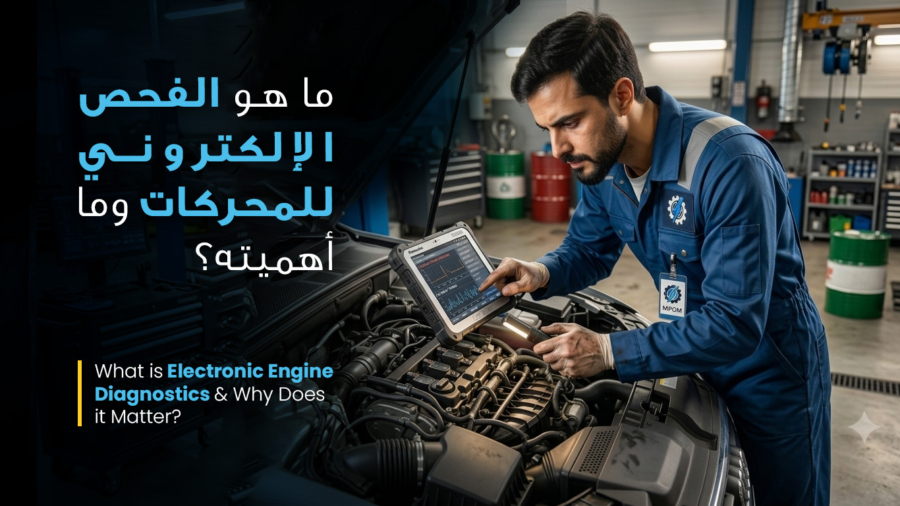
In the past, mechanics relied on their senses — listening for unusual sounds, looking for leaks, feeling for vibrations — to diagnose engine problems.
Today, modern engines in heavy trucks, construction equipment, and generators contain hundreds of sensors and electronic control units that monitor everything from oil pressure to injection timing to turbo exhaust temperature. Electronic diagnostics is the only way to read this data accurately and act on it.
Electronic diagnostics is the process of connecting a specialized diagnostic device to the engine’s Electronic Control Unit (ECU / ECM) via an OBD port or J1939 interface to read:
| Criteria | Traditional | Electronic |
| Accuracy | Estimated | Precise & specific |
| Time Required | Hours or days | Minutes |
| Based On | Mechanic’s experience alone | Data from the engine itself |
| Hidden Fault Detection | Difficult | Direct & reliable |
| Post-repair Calibration | Not available | Available & essential |
1. Saves Time and Money Instead of disassembling the engine in search of a problem, the diagnostic device pinpoints the faulty system within minutes. This directly reduces downtime and labor costs.
2. Catches Problems Before They Escalate Many faults begin as a minor warning code long before they develop into a major breakdown. Regular electronic scanning catches these faults at the earliest stage — when repair is cheap and fast.
3. Required After Every Repair Replaced an injector? Installed a new sensor? Changed a pump? Any electronic component requires calibration after installation. Without it, the engine may run below efficiency or display false fault codes.
4. Provides Documented Service History The electronic fault log gives you a verified record of the machine’s condition — essential for scheduled maintenance, resale, and warranty claims.
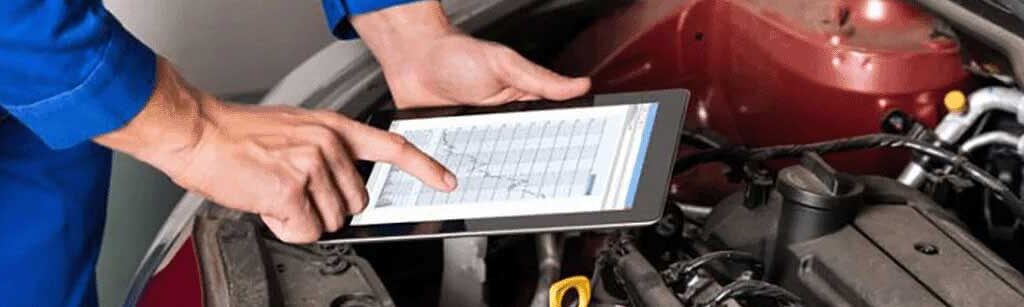
Not all diagnostic tools are equal. At MPOM, we use professional-grade systems:
Nexiq USB Link 2: A professional heavy-duty diagnostic interface covering most North American and European truck brands via J1939 and J1708 protocols. Supports fault code reading, live data, and module programming.
Jaltest Diagnostic System: One of the most comprehensive diagnostic platforms available. Covers heavy trucks, construction equipment, generators, cranes, and pumps across a wide range of brands: CAT, Komatsu, Volvo, Scania, MAN, Mercedes-Benz, Cummins, Perkins, MTU, Doosan, JCB, Liebherr, and more.
At Millennium Power Organization (MPOM), we provide comprehensive electronic diagnostics using Nexiq and Jaltest for all types of heavy trucks, construction equipment, and diesel generators — at your site or in our workshop in Dammam.
Millennium Power — Precise Diagnostics. Professional Repairs.
In the world of contracting and industrial projects, having equipment fail in the middle of a job is not just an inconvenience; it results in direct financial loss, project delays, and added pressure on the entire team.
A truth known by every professional maintenance expert: heavy equipment rarely breaks down suddenly. It usually warns you well in advance, but many operators do not know how to read these warnings.
In this article, we review the most prominent signs that precede major breakdowns in heavy equipment such as excavators, cranes, loaders, and dump trucks, based on our field experience in Dammam and the Eastern Province.
Oil is the engine’s lifeblood. If you pull the dipstick and find:
Action: Any change from normal oil color requires an immediate stop and inspection. Do not wait for the scheduled maintenance.
Does the temperature gauge slowly rise above the green zone? This is not “normal for summer.” Persistent overheating indicates:
Real danger: If the temperature exceeds the maximum limit even once without stopping the equipment, it can cause deformation of the cylinder head, an expensive repair that may take weeks.
Healthy equipment has a steady, familiar sound recognizable to the experienced operator. Any change in sound is a signal:
Advice: Train operators to report any new sound immediately; they are the first to hear issues.
Finding oil or fluid spots under the equipment after just one night of downtime is not “acceptable.” Each fluid has a color and meaning:
| Color | Likely Source |
| Dark black | Engine oil |
| Red or light brown | Hydraulic oil or transmission fluid |
| Green or orange | Coolant |
| Clear yellow | Brake or steering fluid |
Slow leaks become large leaks, and large leaks lead to sudden breakdowns at the worst time.
The hydraulic system is the heart of excavators, cranes, and loaders. Notice if:
These indicate low hydraulic oil, oil contamination, seal failure, or early wear in the pump or valves. Ignoring this leads to damage to the main pump or hydraulic distributor, which are very costly parts to replace.
Modern equipment is equipped with ECU/ECM systems that monitor dozens of variables in real time. If any warning light turns on:
Tools like Jaltest and Nexiq provide the full error code and exact diagnosis for all major equipment brands: CAT, Komatsu, Volvo, Liebherr, JCB, Sany, and more.
If you regularly add engine oil without seeing an external leak, the engine is burning oil internally. Common causes:
Accompanying sign: light blue smoke from the exhaust, especially during acceleration or startup.
Dump trucks or mixers that start to delay gear engagement or make noise when shifting are showing early gearbox or clutch problems. Early repair usually means replacing a single part. Ignoring it may cause complete gearbox failure.
In heavy equipment maintenance, engineers know this rule well: every one Riyal you spend on preventive maintenance saves you ten Riyals on repairs. Regular maintenance, early warning checks, and electronic diagnostics are the real recipe for keeping your fleet running efficiently.
At Millennium Power Organization (MPOM), we provide on-site field inspections and full electronic diagnostics for heavy equipment at your location or in our workshop in Dammam.
We work with all major brands:
CAT · Komatsu · Volvo · Liebherr · JCB · Sany · Terex · Doosan
And heavy trucks: Volvo · Scania · MAN · Mercedes-Benz
Our technical team is equipped with Nexiq and Jaltest diagnostic tools and has extensive field experience in Gulf working environments.
Millennium Power Organization — We discover the problem before it discovers you.
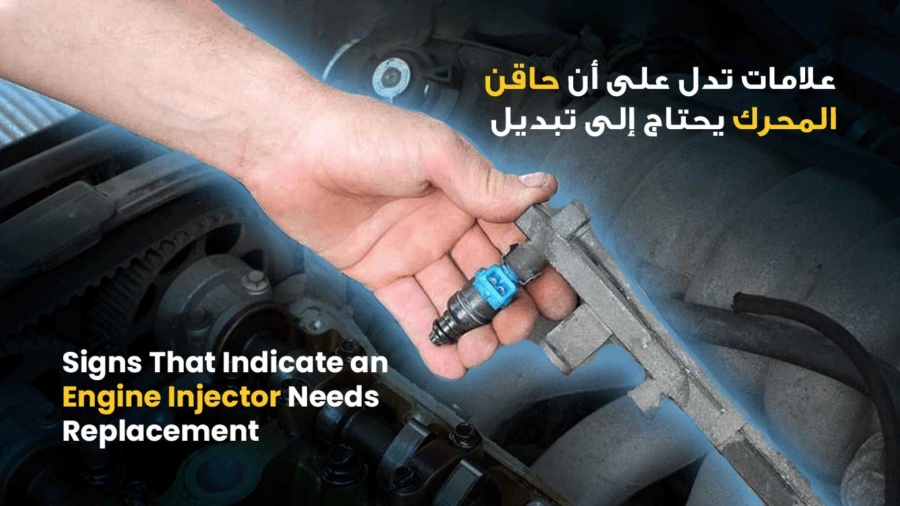
Fuel injectors are the core component of any diesel engine’s injection system. Their primary role is to deliver fuel at precise pressure into the combustion chamber at the right time and in the correct amount. When an injector starts to fail, the engine usually doesn’t stop suddenly; it gives early warning signs if you know what to watch for.
In this article, we highlight common indicators that suggest an injector needs inspection or replacement, based on our extensive experience diagnosing and repairing heavy truck engines, equipment, and generators in Dammam and the Eastern Province.
If the engine shakes or runs unevenly while idling (“rough idle”), this is often one of the earliest signs of an injector problem. A faulty injector delivers an incorrect amount of fuel each cycle, causing uneven combustion across cylinders.
What you might notice: A ticking sound or irregular engine rhythm while the vehicle is stationary.
If your truck, equipment, or generator begins to consume more fuel than usual without any change in operation, this is a clear warning. A worn or clogged injector disrupts the air-fuel mixture balance, forcing the engine to use extra fuel to maintain performance.
Indicator: An unexplained 10–20% rise in fuel consumption requires immediate inspection.
The color of exhaust smoke reveals much about injector health:
Both point to issues with injection pressure or timing.
If the engine struggles more than usual to start, especially when cold, one or more injectors may be leaking or failing to generate enough pressure. This problem is common in Gulf climates where temperatures fluctuate significantly between day and night.
If your engine used to handle heavy loads easily but now slows down or loses power under load, the fuel system may be at fault. A faulty injector cannot supply enough fuel for complete combustion, causing reduced torque and power.
Practical effect: The truck climbs hills more slowly, or the generator struggles to handle full load.
Modern engines with Electronic Control Units (ECUs) can detect injector issues. Diagnostic tools like Nexiq and Jaltest often report fault codes such as:
While these codes don’t always mean an injector must be replaced immediately (sometimes wiring issues are to blame), they are a crucial starting point for diagnosis.
Look closely around injectors for any signs of fuel or oil leaks at the injector base or cylinder head. Leaks often originate from damaged O-rings or injector bodies. Besides reducing performance, leaks are a serious fire hazard.
Don’t ignore early warnings. Delaying can cause damage to the cylinder head or high-pressure pump.
Conduct a full electronic diagnostic with specialized tools to pinpoint the faulty injector before replacement.
Always use OEM or certified injectors. Low-quality replacements fail quickly and may severely damage your engine.
At Millennium Power Organization (MPOM), we use advanced diagnostic tools like Nexiq and Jaltest to inspect fuel injection systems on all major brands of heavy trucks, equipment, and generators, including:
Volvo, Scania, MAN, Mercedes-Benz, Caterpillar, Cummins, Perkins, Doosan, Komatsu, MTU
We offer on-site services or workshop repairs in Dammam’s Industrial Area.
Millennium Power Organization — Technical Expertise, Genuine Parts, Reliable Service.
Power outages can happen without warning, and when they do, your generator becomes one of the most important assets for your home, business, construction site, hospital, or industrial facility. However, a generator is only reliable when it is properly maintained.
One of the most common questions generator owners ask is: “When should I service my generator?”
The answer depends on several factors, including operating hours, usage frequency, environmental conditions, and manufacturer recommendations. In this guide, we’ll explain when generator servicing should be performed and why regular maintenance is essential for long-term reliability.
Generators are designed to provide dependable backup power, but like any engine-driven equipment, they require routine maintenance to perform efficiently.
Regular servicing helps:
Neglecting maintenance can lead to issues such as battery failure, overheating, fuel contamination, coolant leaks, reduced power output, and even complete generator failure during critical situations.

1. Follow Operating Hours
A general rule for most diesel generators is:
Generators operating in demanding environments may require more frequent servicing.
2. Service Annually Even If It Is Rarely Used
Many standby generators remain idle for long periods and are only used during emergencies. Even if your generator has accumulated very few operating hours, an annual maintenance service is strongly recommended.
Components such as batteries, fuel systems, belts, hoses, and fluids can deteriorate over time regardless of usage.
3. Service Before Peak Demand Seasons
Facilities that depend heavily on backup power should schedule preventive maintenance before periods of increased power demand.
Examples include:
A pre-season inspection can identify potential issues before they become costly failures.

Do not wait for the next scheduled maintenance if you notice any of the following:
Difficulty Starting
If the generator struggles to start or fails to start consistently, the battery, fuel system, or starter components may require attention.
Excessive Smoke
Black, blue, or white exhaust smoke can indicate combustion problems, fuel issues, or engine wear.
Fluid Leaks
Oil, coolant, or fuel leaks should be inspected immediately to prevent major engine damage.
Unusual Noises or Vibrations
Knocking sounds, rattling, or excessive vibration may indicate mechanical issues that require professional diagnosis.
Overheating
High operating temperatures can lead to severe engine damage if not addressed promptly.
Reduced Power Output
If the generator cannot handle normal loads or experiences voltage fluctuations, servicing should be scheduled as soon as possible.
A professional generator service typically includes:
These inspections help identify small issues before they become expensive repairs.
Many generator failures occur because routine maintenance was postponed.
A relatively inexpensive preventive maintenance visit can help avoid:
For businesses that rely on continuous power, preventive maintenance is often significantly more cost-effective than emergency repairs.
To maximize generator reliability:
These simple practices can significantly extend generator lifespan and improve performance.
So, when should you service your generator?
For most generators, servicing should be performed every 250 to 500 operating hours, at least once annually, and immediately whenever warning signs appear. Regular maintenance ensures reliable operation, minimizes downtime, and protects your investment.
Regular maintenance is the key to preventing unexpected breakdowns, costly repairs, and operational downtime. At MPOM, we specialize in generator maintenance, troubleshooting, repairs, and operational support for industrial, commercial, and residential clients throughout Saudi Arabia.
Whether your generator is due for routine servicing or showing signs of performance issues, our team is ready to help. Contact MPOM today and let our experts keep your generator reliable, efficient, and ready when it matters most.
Millennium Power Organization — Technical Expertise, Genuine Parts, Reliable Service.
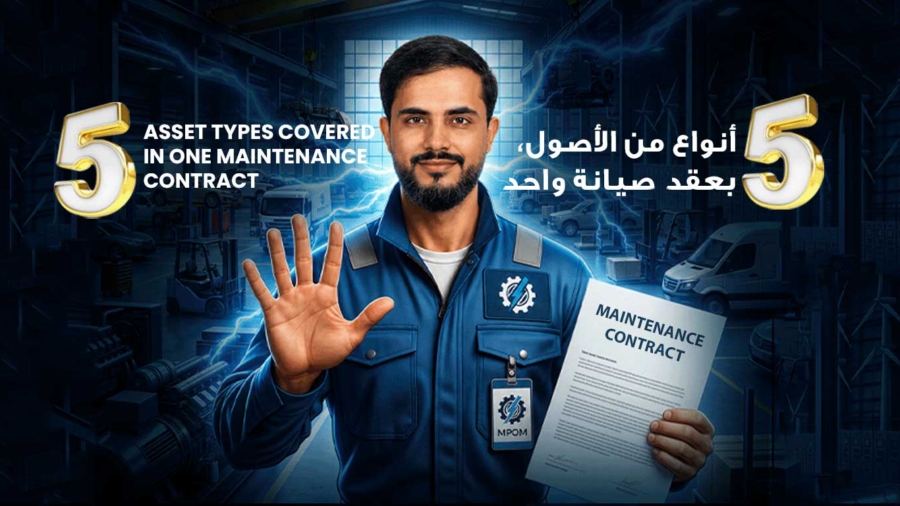
Managing generators, pumps, heavy equipment, trucks, and lifting equipment under different vendors creates unnecessary complexity, risk, and hidden costs for your operations. Instead of coordinating five separate maintenance providers, you can secure a single annual maintenance contract (AMC) that covers all your critical assets under one plan and one specialized team.
At Millennium Power (MPOM), we help industrial clients in the Eastern Province simplify maintenance, reduce unplanned downtime, and gain better visibility over asset performance with integrated maintenance contracts tailored to their sites.

An annual maintenance contract (AMC) is a long‑term agreement between your organization and a specialized service provider to perform periodic preventive and corrective maintenance on your equipment over a defined period, usually 12 months.
Rather than calling different contractors when something goes wrong, an AMC gives you a structured maintenance plan, scheduled visits, and clear reporting for all your covered assets.
Most industrial facilities rely on multiple categories of equipment that are critical for production, logistics, and safety. MPOM’s maintenance contracts can be structured to cover five major asset groups under one agreement:
By including all of these in a single contract, you get a unified view of the health and performance of your assets, rather than scattered data from multiple vendors.

We designed our AMC process to be simple and transparent, so facility managers and asset owners can quickly understand what is covered and how service will be delivered.
You provide a structured list of your assets, including generators, pumps, equipment, trucks, forklifts, cranes, and other lifting equipment. Ideally, this includes essential details such as capacity, model, age, and operating hours.
Based on the asset list, manufacturer recommendations, operating conditions, and your production calendar, we create a maintenance schedule that aligns with your operations. The goal is to plan downtime instead of reacting to breakdowns.
MPOM’s technicians perform regular site visits according to the agreed schedule. After each visit, you receive clear, unified reports that show what has been inspected, what was serviced, and any issues that require follow‑up. Over time, these reports help you track reliability trends and plan asset renewal.
Running multiple contracts with different vendors for each asset category may seem flexible, but in practice it often leads to higher costs and more operational risk. Consolidating your maintenance under one provider offers several advantages:
You have a single point of contact for planning, site access, permits, and coordination. This reduces administrative workload and makes communication faster and clearer.
A coordinated maintenance schedule across all your assets reduces the risk that a suddenly failing component will stop production, delay a project, or compromise safety.
A unified contract makes budgeting easier. Instead of paying different prices, call‑out charges, and emergency fees to several vendors, you work with one transparent agreement and a defined cost structure.
When all maintenance is handled under one system, you receive standardized reports across generators, pumps, equipment, vehicles, and lifting equipment. This helps management, HSE, and finance teams make better decisions based on consistent data.
For facilities in the Eastern Province and similar industrial regions, a consolidated maintenance contract can contribute to:
| Higher equipment availability and reliability | Better compliance with internal standards and regulatory requirements | Reduced administrative overhead in managing contractors and invoices | Improved lifecycle planning for equipment replacement and upgrades |
Instead of reacting to problems, your team can focus on production and operations while a dedicated maintenance partner takes care of equipment health.
A unified maintenance contract is especially valuable if:
If several of these points apply to your organization, it may be the right time to transition to a single, integrated AMC.
How to Get Started: Share Your Asset List
Getting started with an MPOM maintenance contract is straightforward. The first step is simply to send us your asset list. Include all relevant equipment such as generators, pumps, heavy machinery, trucks, forklifts, cranes, manlifts, and telehandlers.
Once we receive your list, we can assess your current situation, recommend an appropriate maintenance strategy, and propose an annual contract tailored to your facility and operating environment.
Let’s talk about your project — Contact us.
Millennium Power Organization — Technical Expertise, Genuine Parts, Reliable Service.