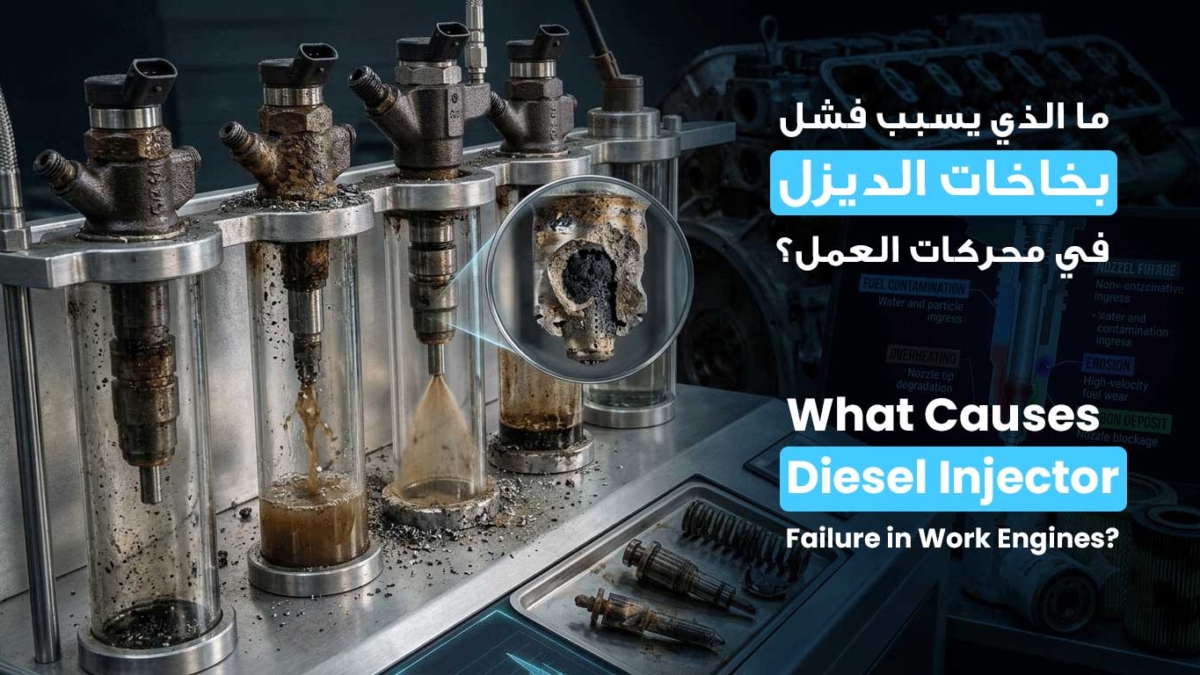
A generator that hunts under load, a truck that begins smoking during acceleration, or a loader that loses power at the wrong moment can all point to the same fuel-system problem. Understanding what causes diesel injector failure helps maintenance teams act before a rough-running engine becomes an unplanned shutdown, expensive internal repair, or missed production target.
Modern diesel injectors operate under extreme pressure and precise electronic control. They must deliver a carefully measured fuel quantity at the exact moment the engine needs it. Even a small restriction, leak, electrical fault, or spray-pattern issue can affect combustion. For uptime-critical fleets and industrial equipment, the goal is not simply to replace a failed injector. It is to identify and correct the condition that caused it.
What Causes Diesel Injector Failure?
Diesel injector failure usually develops from fuel contamination, inadequate filtration, heat, wear, poor combustion conditions, or electrical faults. The exact cause depends on the engine design, duty cycle, fuel quality, maintenance history, and whether the machine uses a mechanical injection system or electronically controlled common-rail injectors.
An injector can fail by sticking open or closed, delivering too much or too little fuel, leaking externally or internally, or producing an incorrect spray pattern. Any of these faults can reduce power, increase fuel consumption, create excessive smoke, and place the engine at risk.
Contaminated Fuel and Water Entry
Contaminated diesel is one of the most common causes of injector damage. Dirt, rust, tank sediment, and fine debris can pass through an overloaded, damaged, or incorrect fuel filter. At injector tolerances, particles too small to see can score internal components and interfere with the needle valve or control valve.
Water is equally damaging. It reduces fuel lubricity and can cause corrosion inside the fuel tank, lines, high-pressure pump, rail, and injectors. Water contamination may result from poor fuel storage, condensation in partially filled tanks, damaged filler caps, or contaminated supply deliveries. Once corrosion products enter the fuel system, replacing one injector without flushing the system may lead to repeated failures.
Poor Filtration and Delayed Filter Service
Fuel filters are a low-cost protection component, but they are often serviced late when equipment is operating continuously. A blocked filter can restrict fuel supply, placing stress on the lift pump and high-pressure pump. A compromised filter, incorrect filter specification, or poor-quality replacement can also allow contaminants through.
Filter condition should never be judged only by engine hours. Equipment operating on dusty construction sites, working in high temperatures, or receiving fuel from temporary storage tanks may require more frequent inspection and water separation. A maintenance schedule must reflect actual operating conditions, not only the interval printed in a manual.
Low Lubricity or Incorrect Fuel
Diesel fuel provides lubrication for critical components in the injection system. Fuel with inadequate lubricity can accelerate wear in the pump and injector internals. In severe cases, wear particles generated by a failing high-pressure pump circulate through the fuel system and damage multiple injectors.
Using the wrong fuel, mixing incompatible products, or relying on unapproved additives can create similar problems. Additives may help in specific applications, but they are not a substitute for clean fuel, correct storage, and manufacturer-approved maintenance practices. Before treating a fuel issue, confirm the engine specification and investigate the source of the problem.
Carbon Deposits and Poor Combustion
Injectors operate in a high-temperature combustion environment. Over time, deposits can form on injector tips and nozzles, changing the fuel spray pattern. Instead of a fine, controlled atomized spray, the injector may dribble fuel or direct it unevenly into the cylinder.
Poor atomization leads to incomplete combustion. The result may be black smoke, hard starting, reduced power, increased exhaust temperature, piston deposits, and fuel dilution of engine oil. In some engines, combustion gases can also leak past the injector seat. This creates carbon buildup around the injector body, commonly called blow-by, and can make injector removal difficult while damaging the sealing area.
Deposits are more likely when equipment spends long periods idling, operates at light load, has intake or turbocharger issues, or receives inconsistent fuel quality. The injector may be the visible fault, but the operating condition behind the deposits still needs correction.
Overheating and Excessive Engine Stress
High engine temperature affects combustion quality and places greater stress on fuel-system components. Cooling system faults, restricted airflow, overloaded operation, or an unresolved turbocharger problem can contribute to injector-related symptoms.
Injector failure can also cause overheating within a cylinder. An injector that overfuels may raise exhaust gas temperatures and damage pistons, valves, or turbocharger components. An injector that underfuels can create a misfire or imbalance that reduces engine performance. This is why continued operation with obvious injector symptoms is a costly risk, especially for generator sets and heavy equipment working under load.
Electrical and Electronic Control Faults
On common-rail engines, not every injector problem is mechanical. Wiring damage, loose connectors, corrosion, poor grounding, sensor faults, and ECU or ECM issues can prevent an injector from receiving the correct command. An injector circuit fault may trigger a warning code, but codes alone do not prove that the injector itself has failed.
A proper diagnosis includes checking injector connector condition, harness continuity, supply voltage where applicable, fault codes, live data, and cylinder balance values. Replacing injectors before confirming these items can increase repair cost without restoring reliable operation.
Incorrect Installation or Sealing Failure
Injector replacement requires clean working practices and correct installation procedures. Dirt entering an open fuel line, a reused sealing washer, incorrect torque, an improperly cleaned injector seat, or damaged return lines can cause immediate or early failure.
Injector coding is another consideration on many electronically controlled engines. Where required, the replacement injector calibration code must be entered into the ECU. Skipping this step can affect fueling correction and engine performance. The right part number, correct coding, new seals, and a clean fuel system are all part of a dependable repair.
Warning Signs That Need Prompt Attention
Injector faults do not always produce a sudden no-start condition. More often, they begin as a change in engine behavior. Operators and supervisors should report hard starting, unstable idle, reduced pulling power, increased fuel use, engine knock, fuel odor, or unusual exhaust smoke.
Black smoke often indicates overfueling or insufficient air, while white smoke may point to unburned fuel, poor combustion, or starting-related issues. Blue smoke can involve oil consumption and should not automatically be blamed on injectors. The symptoms overlap with turbocharger, compression, air intake, EGR, sensor, and fuel-pump faults. That is why technical testing matters.
A fuel leak around an injector, wet return line, or black carbon residue at the injector base requires quick inspection. External leakage is a fire and safety concern. Carbon blow-by can damage the cylinder head sealing surface if it is allowed to continue.
Diagnose the Cause Before Replacing Parts
A reliable injector repair starts with a structured inspection. First, verify the complaint under the conditions where it occurs: cold start, idle, acceleration, loaded operation, or full generator load. Then inspect fuel quality, drain the water separator, examine filters, check for leaks, and review the equipment service history.
For electronically controlled systems, technicians should scan fault codes and review live operating data. Cylinder contribution or balance testing can identify an underperforming cylinder, but further testing is needed to establish whether the cause is the injector, wiring, compression, or air handling. Return-flow testing can reveal excessive internal injector leakage. Where appropriate, injectors should be bench tested for spray pattern, opening behavior, flow, and response.
If a high-pressure pump has failed or metallic debris is found, treating the job as a single-injector replacement is usually not enough. The tank, lines, rail, pump, filters, and injectors may all require cleaning, inspection, or replacement. This is a larger repair, but it prevents contaminated components from destroying new parts after startup.
Maintenance Practices That Protect Injectors
The most effective protection is disciplined fuel management. Keep storage tanks clean and covered, control water entry, use the correct fuel, and avoid drawing fuel from the bottom of a tank where sediment collects. Drain water separators as required and replace fuel filters with quality parts at intervals suited to the operating environment.
Avoid prolonged unnecessary idling, and ensure engines regularly reach suitable operating temperature and load where the application allows it. Maintain the cooling system, air filters, turbocharger, and intake system because combustion quality depends on more than fuel delivery.
When an injector concern appears, document the symptoms early. Recording smoke color, operating load, fault codes, fuel source, and recent service work gives technicians a faster path to the real cause. For fleet and plant managers, this also helps identify repeat failures tied to a specific fuel supplier, storage tank, machine group, or worksite condition.
For operations in Dammam, Dhahran, Khobar, Jubail, and Alahsa, fast diagnostic support can make the difference between a controlled repair and a prolonged equipment outage. MPOM supports diesel engine diagnostics, injector and pump repair, engine overhaul, and preventive maintenance with the focus where it belongs: returning critical equipment to safe, dependable service.
An injector failure is rarely just a parts problem. Treat it as a fuel-system and operating-condition investigation, and the repair will do more than restart the engine – it will protect the next shift, the next project milestone, and the equipment budget behind it.