A diesel engine that starts hard in the morning, smokes under load, or burns more fuel than usual rarely fixes itself. In many cases, the problem starts at the injector. A professional fuel injector testing service helps identify whether the issue is poor spray pattern, low opening pressure, leakage, uneven delivery, or contamination before the fault turns into a larger engine repair.
For operations managers and fleet owners, that matters because injector faults do not stay isolated for long. One weak injector can create rough running, higher exhaust temperatures, piston damage, poor combustion, and unnecessary fuel cost. On generators, trucks, construction equipment, forklifts, and industrial engines, the result is the same – lost uptime and avoidable pressure on maintenance budgets.
What a fuel injector testing service actually checks
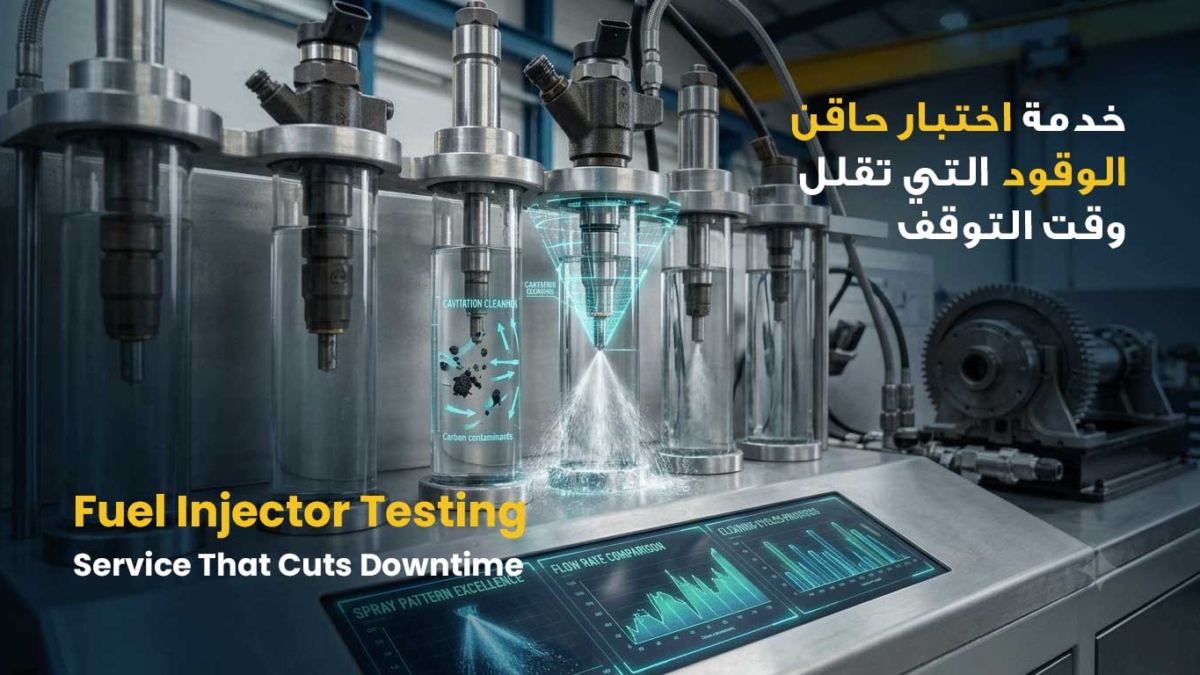
Injector testing is not just a quick visual inspection. A proper service measures how the injector performs under controlled conditions and compares that performance against the required specification for the engine application.
The first concern is usually spray quality. If atomization is poor, fuel does not burn cleanly or efficiently. Instead of a fine, even spray, the injector may dribble, stream, or deliver an irregular pattern. That directly affects combustion and engine response.
Opening pressure is another critical point. If opening pressure is too low or too high, timing and fuel delivery are affected. The engine may knock, smoke, lose power, or become difficult to start. In diesel applications, even a small variation between injectors can create an imbalance that shows up as rough idle, poor load acceptance, or inconsistent cylinder performance.
Leakage is also a major concern. An injector that leaks at the nozzle or return side can cause overfueling, carbon buildup, dilution of engine oil, and excessive smoke. In severe cases, leakage contributes to internal engine damage over time.
A complete test also looks at delivery consistency across the injector set. This is especially important for engines that operate under constant load, such as generators and industrial pumps. When one cylinder receives a different fuel quantity than the others, performance becomes uneven and reliability drops.
Why injector faults are often misdiagnosed
Injector problems can look like other engine issues. A machine with low power may be blamed on turbocharger performance, compression loss, or fuel supply restriction. Hard starting can be mistaken for battery weakness or poor cranking speed. Black smoke may send attention toward the air intake side first.
Sometimes that approach is reasonable. Engine diagnostics should follow evidence, not assumptions. But injectors sit at the center of combustion quality, so ruling them out properly is essential. Without injector testing, repairs can become expensive trial and error.
This is where a structured fuel injector testing service saves time. It separates injector faults from pump issues, sensor problems, fuel contamination, and mechanical wear. That leads to more accurate repair decisions and less unnecessary parts replacement.
Signs your equipment may need injector testing
The warning signs are usually visible in operation before they show up in a workshop report. If fuel consumption rises without a clear change in workload, injectors should be considered. The same applies when operators report unstable idle, misfiring, white smoke at startup, black smoke under acceleration, or a noticeable drop in power.
On generators, a common sign is unstable frequency or poor response when load comes on. On construction equipment, operators may notice hesitation, rough running, and weak performance under hydraulic demand. In trucks and fleet vehicles, injector issues often show up as hard starting, excessive smoke, or a complaint that the engine feels less responsive than normal.
None of these symptoms automatically confirm injector failure. It depends on engine condition, fuel quality, duty cycle, and maintenance history. But they are strong enough reasons to test rather than guess.
The value of testing before repair or replacement
Not every injector needs replacement. That is one of the most practical reasons to test first. Some injectors can be cleaned, recalibrated, resealed, or repaired depending on design, wear level, and parts availability. Others may fail testing in a way that clearly justifies replacement.
Without testing, there is a tendency to replace complete sets to save time. In some situations, that makes sense, especially on high-hour engines where wear is broad and reliability is critical. But for many commercial and industrial operators, accurate testing gives better control over maintenance cost. It shows whether the problem is isolated, systemic, or linked to contamination upstream.
Testing also protects the new parts you install. If injectors are replaced without addressing dirty fuel, pump wear, tank contamination, or improper pressure, the same problem can return quickly. A good service process looks beyond the injector body and checks the condition of the wider fuel system.
What a proper injector service process should include
A reliable injector workshop process starts with identification and specification matching. Injectors must be tested against the correct engine data, not generic assumptions. Different applications have different pressure ranges, nozzle characteristics, and tolerance limits.
The next step is controlled bench testing. This confirms opening pressure, spray pattern, seat sealing, and overall function. If the injector is serviceable, it may then be disassembled for cleaning, inspection, and replacement of worn internal components where applicable.
After repair, calibration matters. This is where many injector issues are either solved properly or pushed back into service with hidden defects. Calibration ensures the injector is not only working, but working within the right operating range for the engine.
Final verification is just as important. Re-testing after cleaning or repair confirms that the injector now performs correctly and consistently. For business-critical equipment, that last step is what gives maintenance teams confidence before reinstalling parts and returning a machine to duty.
Why speed matters in injector diagnostics
In industrial operations, technical quality and response time have to work together. A detailed diagnosis is valuable, but not if the equipment sits idle for days waiting for basic answers. That is why injector service should be part of a larger maintenance capability, not a standalone bench activity with no operational follow-through.
When the service provider can handle diagnostics, mechanical repair, related fuel system work, and parts support under one process, downtime is reduced. The issue is identified faster, approvals are clearer, and the repair path is more direct. For companies managing generators, fleet vehicles, heavy equipment, or pumps across active sites, that coordination has real financial value.
In the Eastern Province, where many operations run on tight schedules and high equipment utilization, quick technical decisions matter. A delayed injector diagnosis can affect transport commitments, project timelines, backup power reliability, and site productivity.
Preventive testing vs failure response
Most businesses only request injector testing after a breakdown symptom becomes serious. That is understandable, but it is not always the lowest-cost approach. Preventive testing during scheduled maintenance can catch weak spray quality, pressure drift, and leakage before those issues create larger combustion problems.
This is especially useful for engines that run long hours, carry critical loads, or operate in dusty and high-temperature conditions. The harsher the environment, the less room there is for fuel system inefficiency. Preventive injector checks can be planned around service windows, which is usually far less disruptive than emergency repair.
There is still a trade-off. Not every asset needs the same testing interval. A lightly used backup unit may not require the same injector attention as a prime power generator or a heavily worked fleet truck. Service planning should follow runtime, fuel quality exposure, engine history, and the operational cost of failure.
Choosing a fuel injector testing service partner
The right service partner should understand more than injectors in isolation. They should understand engines, duty cycles, site conditions, and the urgency behind every service request. That is the difference between a workshop that only issues a test result and a maintenance partner that helps keep equipment available.
Look for clear diagnostic discipline, correct testing procedures, repair capability, and the ability to support related systems if the injectors are not the only issue. Practical communication also matters. Maintenance teams need direct findings, realistic repair options, and turnaround that fits operational pressure.
For companies managing uptime-critical assets, a fuel injector testing service is not just about component inspection. It is a way to protect combustion quality, control fuel cost, prevent secondary engine damage, and make maintenance decisions with evidence instead of assumptions.
When an engine starts sending early warning signs, the fastest path back to reliable performance is usually the simplest one – test the injectors properly before the problem spreads.