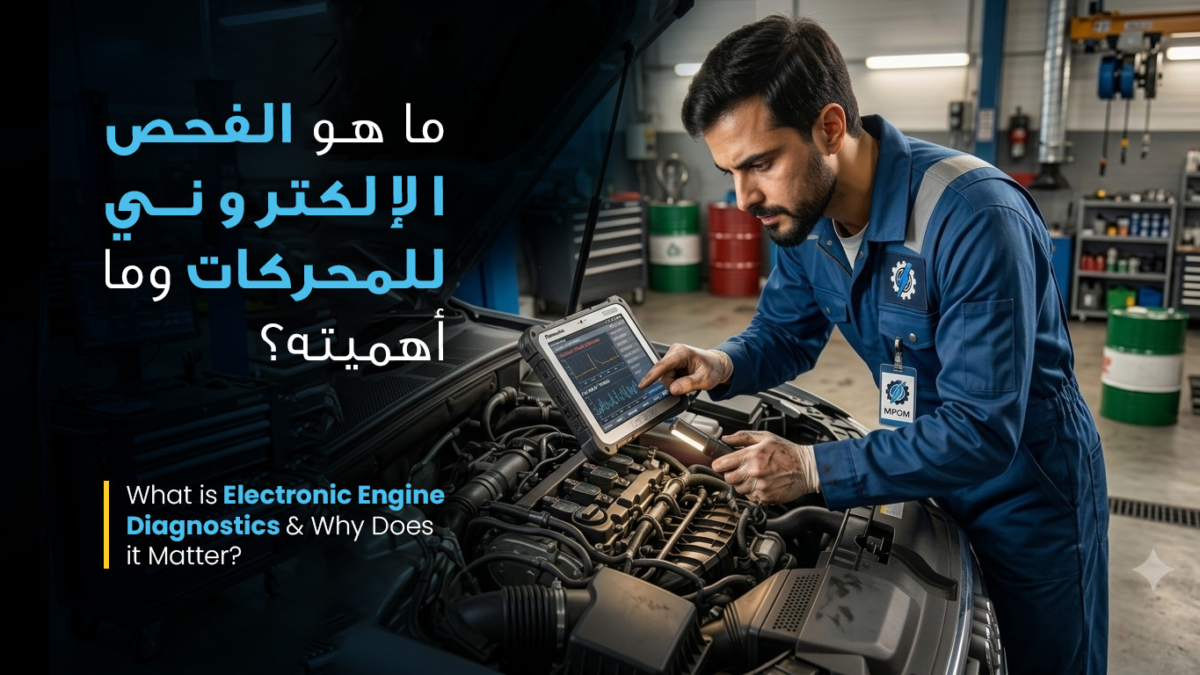
In the past, mechanics relied on their senses — listening for unusual sounds, looking for leaks, feeling for vibrations — to diagnose engine problems.
Today, modern engines in heavy trucks, construction equipment, and generators contain hundreds of sensors and electronic control units that monitor everything from oil pressure to injection timing to turbo exhaust temperature. Electronic diagnostics is the only way to read this data accurately and act on it.
What Is Electronic Engine Diagnostics?
Electronic diagnostics is the process of connecting a specialized diagnostic device to the engine’s Electronic Control Unit (ECU / ECM) via an OBD port or J1939 interface to read:
- Fault Codes (DTCs): Codes that identify the faulty system and root cause with precision.
- Live Data: Real-time sensor readings while the engine is running — pressure, temperature, RPM, fuel flow, and more.
- Fault History: Past faults stored in the ECU, even if no longer active.
- Programming & Calibration: Adjusting electronic settings such as injector coding after replacement.
Traditional vs. Electronic Diagnostics
| Criteria | Traditional | Electronic |
| Accuracy | Estimated | Precise & specific |
| Time Required | Hours or days | Minutes |
| Based On | Mechanic’s experience alone | Data from the engine itself |
| Hidden Fault Detection | Difficult | Direct & reliable |
| Post-repair Calibration | Not available | Available & essential |
Why Is Electronic Diagnostics Essential?
1. Saves Time and Money Instead of disassembling the engine in search of a problem, the diagnostic device pinpoints the faulty system within minutes. This directly reduces downtime and labor costs.
2. Catches Problems Before They Escalate Many faults begin as a minor warning code long before they develop into a major breakdown. Regular electronic scanning catches these faults at the earliest stage — when repair is cheap and fast.
3. Required After Every Repair Replaced an injector? Installed a new sensor? Changed a pump? Any electronic component requires calibration after installation. Without it, the engine may run below efficiency or display false fault codes.
4. Provides Documented Service History The electronic fault log gives you a verified record of the machine’s condition — essential for scheduled maintenance, resale, and warranty claims.
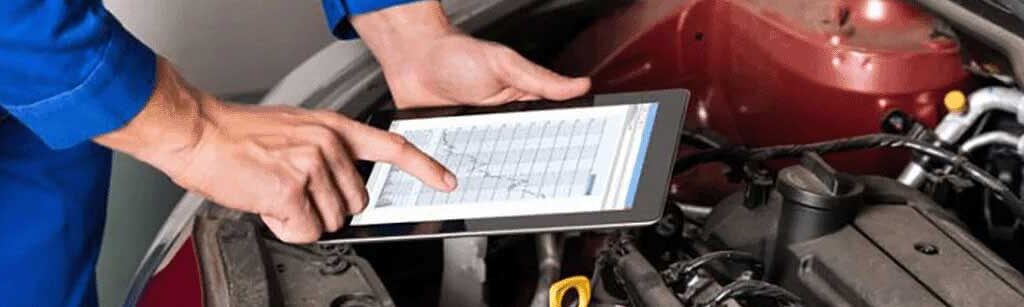
What Diagnostic Tools Are Used?
Not all diagnostic tools are equal. At MPOM, we use professional-grade systems:
Nexiq USB Link 2: A professional heavy-duty diagnostic interface covering most North American and European truck brands via J1939 and J1708 protocols. Supports fault code reading, live data, and module programming.
Jaltest Diagnostic System: One of the most comprehensive diagnostic platforms available. Covers heavy trucks, construction equipment, generators, cranes, and pumps across a wide range of brands: CAT, Komatsu, Volvo, Scania, MAN, Mercedes-Benz, Cummins, Perkins, MTU, Doosan, JCB, Liebherr, and more.
When Do You Need an Electronic Diagnostic Scan?
- When any warning light appears on the control panel
- When you notice a change in engine performance without an obvious cause
- After any repair or replacement of an electronic component
- Before purchasing a used machine or truck
- As part of routine maintenance, every 250–500 operating hours
Electronic Diagnostic Services at MPOM
At Millennium Power Organization (MPOM), we provide comprehensive electronic diagnostics using Nexiq and Jaltest for all types of heavy trucks, construction equipment, and diesel generators — at your site or in our workshop in Dammam.
Millennium Power — Precise Diagnostics. Professional Repairs.